 |
Giant, dinosaur-eating crocodiles used to roam the Sahara. |
World History |
 |
| |
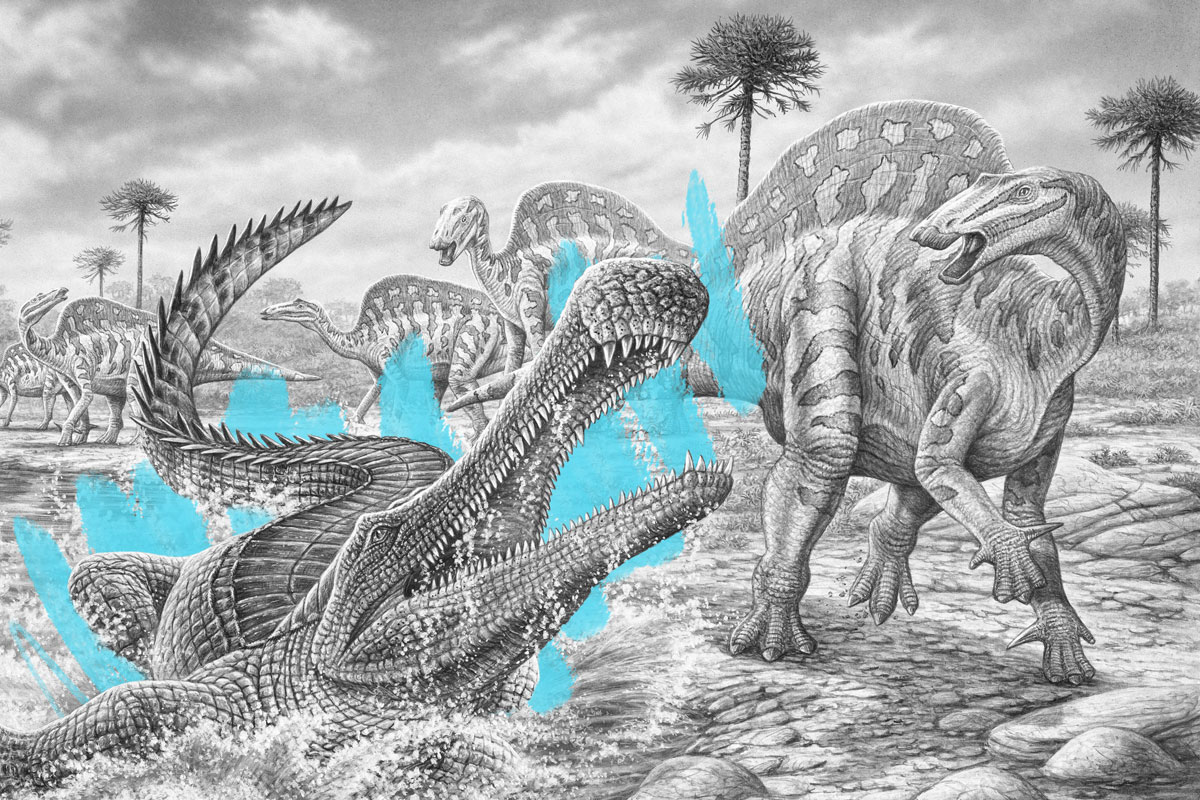
While the S. imperator was first identified based on a partial skull in 1964, Sereno's discovery, published in 2001, unleashed a flurry of fresh information about these giant creatures. Their tooth pattern was designed to take down some seriously big prey — their diet included large dinosaurs, perhaps even 20 feet long. Their eyes and noses were located on top of their heads, implying that they would sink into rivers and lie in wait before ambushing their prey. Like extant crocodilians, these creatures could keep growing throughout their lives; the biggest specimens were around 50 to 60 years old.These giant river-dwellers highlight how different the world looked in the early Cretaceous Period. Ténéré is a particularly dry area of the Sahara, a desert within a desert, but millions of years ago it was a tropical forest with rivers large enough for multiple SuperCrocs to lurk in. Luckily for the dinosaurs of the period, the predators' large bodies meant they couldn't travel very fast once they left the water. |

 | |||||||||
By the Numbers | |||||||||
| |||||||||
| |||||||||
| |||||||||
| |||||||||
There used to be a much wider variety of crocodiles. | |||||||||
Before the Cretaceous–Paleogene extinction event — the one that wiped out most dinosaurs — Earth was home to all kinds of crocodiles that looked very different from one another. Many of them were given rather goofy nicknames by the scientists who discovered them. For example, there's PancakeCroc, with its distinct flat head, and DuckCroc, with a beaklike snout. Several varieties of crocodile galloped. Some were even herbivores. The crocodilians we have today, which vary little from species to species, were just the ones that survived, and unfortunately, that did not include the tiny, short-snooted Simosuchus clarki, which one paleontologist described as having "the proportions of a lap dog." | |||||||||

| |||
Recommended Reading | |||
 | |||
U.S. History | |||
| |||
 | |||
Science & Industry | |||
| |||
| + Load more | |||
| |||||||||||||||||||||||||||||||||||||||||||||||||||||||











| |||||||||
| 325 North LaSalle Street, Suite 200, Chicago, IL 60654 | |||||||||
|


No comments:
Post a Comment