Why does it come 'straight from the horse's mouth'? | | If something comes straight from the horse's mouth, that news is coming directly from the source. But the origins of this idiom are much less cut and dry. | |  | Bennett Kleinman |
|
| | 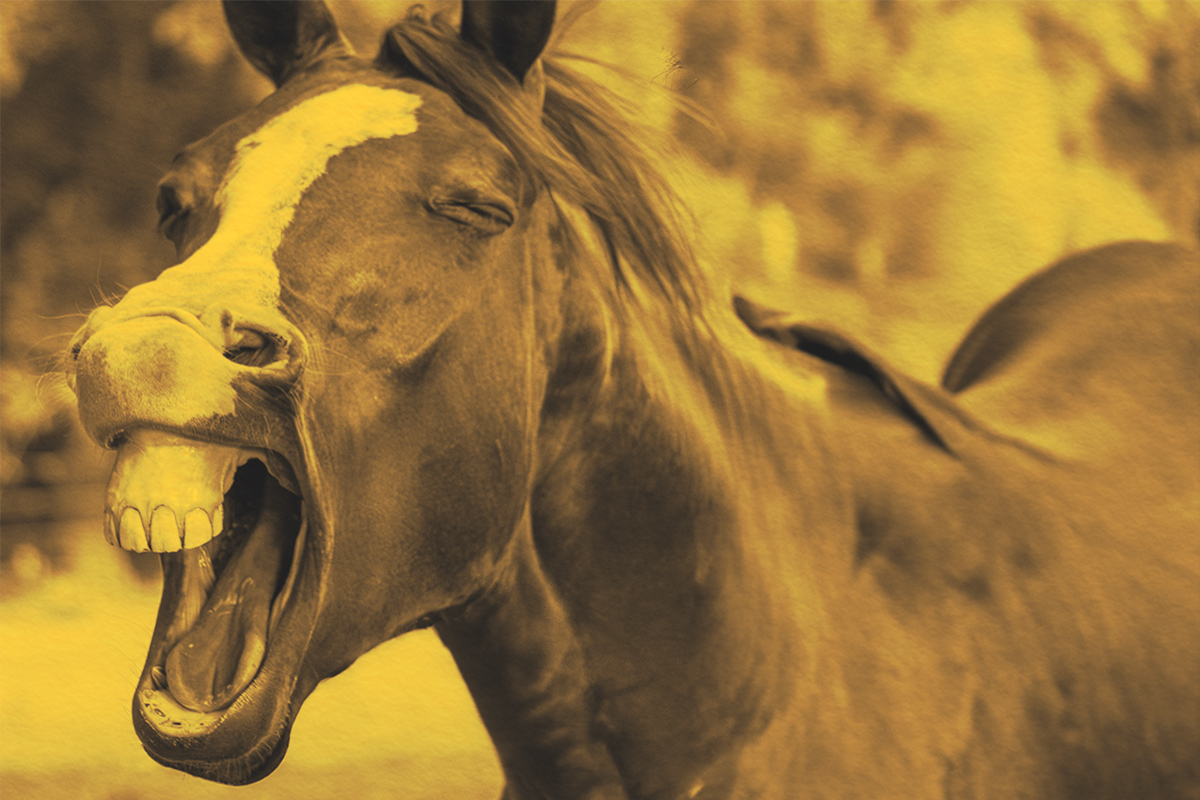 | | O utside of an episode of the 1960s sitcom Mister Ed, there's no such thing as a talking horse. But reality rarely gets in the way of a good idiom. Take "straight from the horse's mouth," a phrase referring to information derived from a reputable source. The origins of this saying are uncertain, but there are two theories worth discussing.
One possible origin story has to do with the world of horse betting. An early citation of the idiom from 1861 appeared in an advertisement for a racetrack: "A raker to win, straight from the horse's mouth, and two steamers for places." That might make sense to a 19th-century bettor, but it doesn't clear up the origin story for us. The phrasing came closer to its modern meaning by the time it appeared in a 1910 article on the topic of horse racing in the Daily Herald of Adelaide, Australia. The article noted that some gamblers got beneficial information "straight from the horse's mouth." In other words, trainers, jockeys, and other stable workers would pass along sensitive info about the horses that wasn't publicly available, making it seem as if it came from the horse itself. Well-connected bettors had an insider advantage. |
| | Continue reading | |  |
|
Emoji Decoded | | 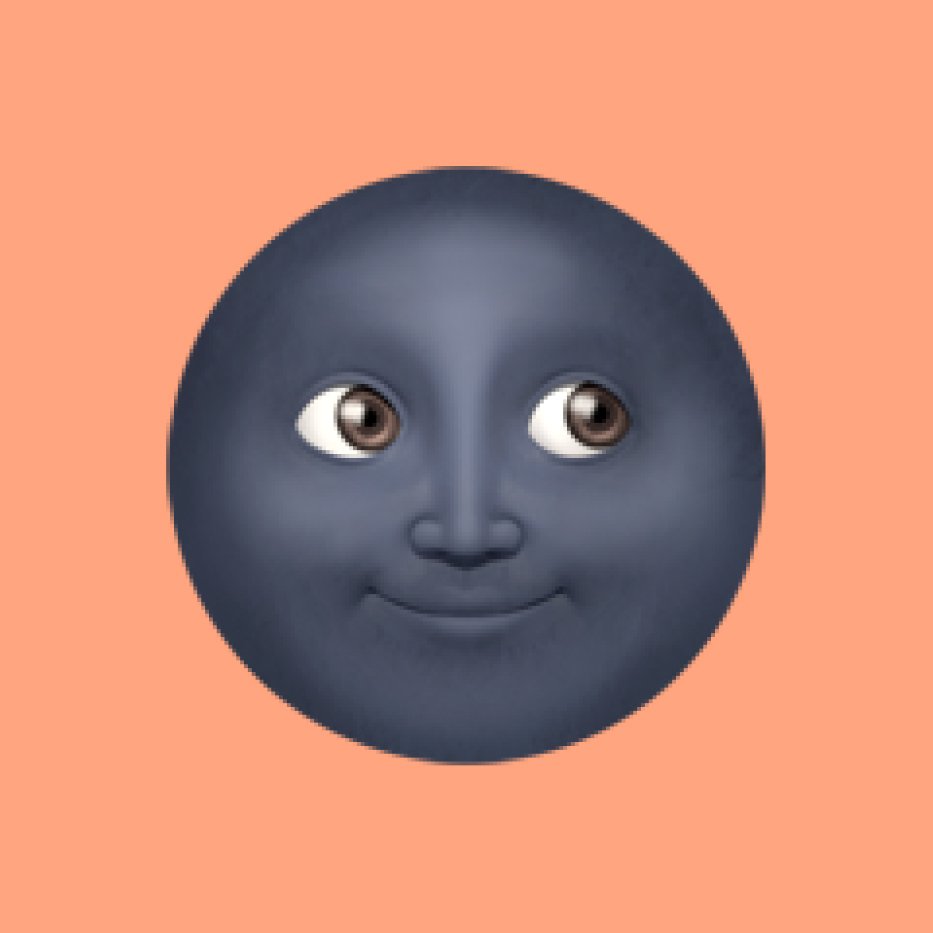 | | New Moon with Face | | | Meaning: Represents the new moon phase with an anthropomorphized face, often used to convey a sense of mystery, mischief, or creepiness.
Evolution: While it may be used as part of the lunar cycle, the dark appearance and somewhat unsettling expression of the New Moon have led to its use in humorous or slightly sinister contexts.
Usage: [X post about mood swings:] My emotions throughout the day: 🌞➡️😊➡️😠➡️🌚 |
|
| | New Moon with Face | | | Meaning: Represents the new moon phase with an anthropomorphized face, often used to convey a sense of mystery, mischief, or creepiness.
Evolution: While it may be used as part of the lunar cycle, the dark appearance and somewhat unsettling expression of the New Moon have led to its use in humorous or slightly sinister contexts.
Usage: [X post about mood swings:] My emotions throughout the day: 🌞➡️😊➡️😠➡️🌚 |
|
| |
Have you read? | |  | | North of Ordinary | | By Sue Aikens | | Author Sue Aikens was one of the stars of the long-running National Geographic series "Life Below Zero," which offered a glimpse of what life looks like in northern Alaska. In the memoir "North of Ordinary," Aikens tells her personal story of how she came to live north of the Arctic Circle, and why she stays, despite the hardship and danger. | | | | Samantha Abernethy, Word Smarts Writer | | | | We independently evaluate all recommended products and services. If you click on links we provide, we may receive compensation. |
|
| | North of Ordinary | | By Sue Aikens | | Author Sue Aikens was one of the stars of the long-running National Geographic series "Life Below Zero," which offered a glimpse of what life looks like in northern Alaska. In the memoir "North of Ordinary," Aikens tells her personal story of how she came to live north of the Arctic Circle, and why she stays, despite the hardship and danger. | | | | Samantha Abernethy, Word Smarts Writer | | | | We independently evaluate all recommended products and services. If you click on links we provide, we may receive compensation. |
|
| |
You might also like | |  | | | | Why Do We Say 'Down Pat' for Mastery? | | To have something "down pat" means that you are skillful and proficient. But does the "pat" in question refer to a person named Pat, or one of the other definitions of "pat"? Let's get to the bottom of this. |
| | | |
|





No comments:
Post a Comment