 |
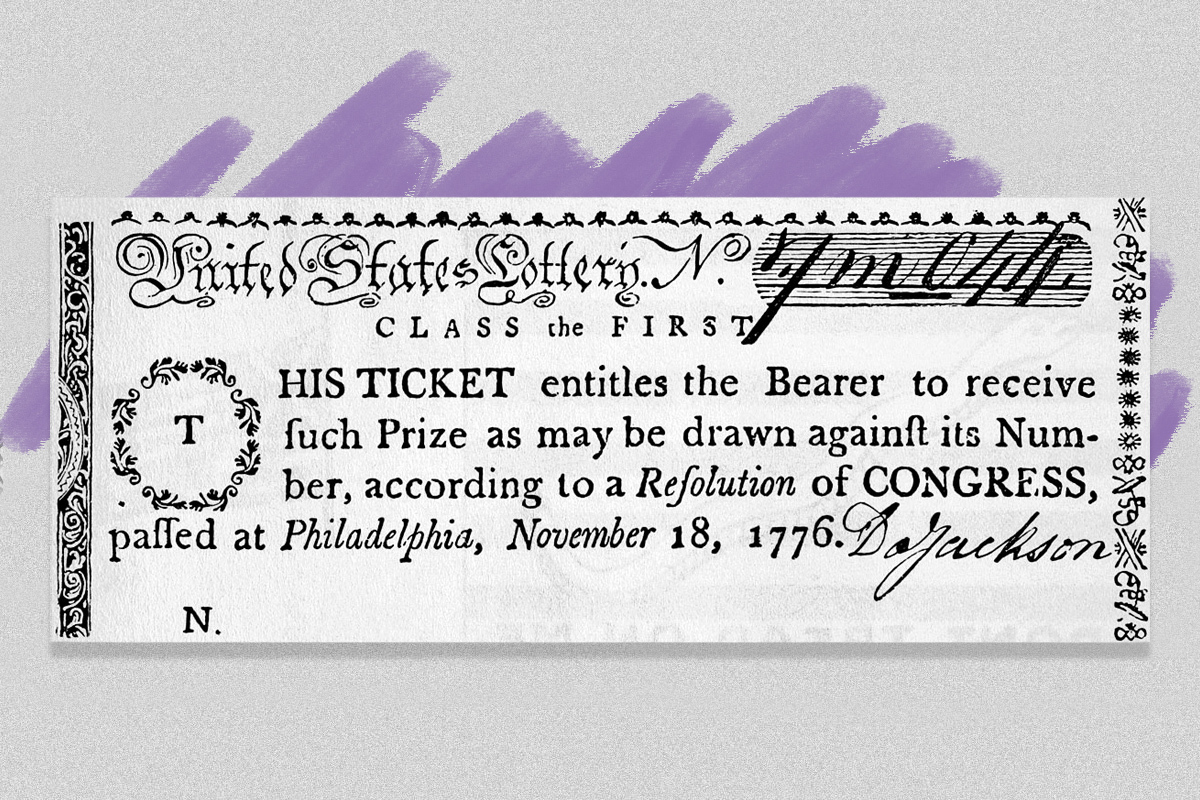
Congress created a lottery to help fund the American Revolution. |
U.S. History |
 |
| |
The inspiration came, in part, from colonial lotteries that helped fund early settlements such as Jamestown and public works projects including streets and churches. This time, Congress hoped the proceeds from selling lottery tickets could be used to pay soldiers and manufacture munitions. | |
On November 18, 1776, it enacted a national lottery with the goal of raising $1.5 million (roughly $105.5 million today) in Continental currency, a form of paper money that was issued the year before to help finance the war. However, this speculative currency lacked solid backing and quickly depreciated, losing a chunk of its value by the time the lottery began; it was rendered virtually worthless by the time it ceased circulation in 1781. Because of this, as well as some marketing and distribution issues, the lottery failed to attract much public interest. | |
The lottery was set to be held in four phases, with the first drawing planned for March 1, 1777. But mismanagement and poor ticket sales caused it to be delayed until May 27, 1778. By that time, only 36,000 of the 100,000 tickets — which cost $10 each — had been sold. This saddled the fledgling government with a net loss in excess of $72,000 as it still had to fund organizational costs and pay out the winner. | |
The next drawing took place the following year, but the lottery quickly fizzled out after that. In the end, it generated less than $100,000 in funds for Congress to use as it saw fit — just 6.5% of the initial estimate. Having fallen short of its goal, the government instead relied on loans from France, donations from wealthy financiers, and other revenue sources to fund the war effort. |

 | |||||||||
By the Numbers | |||||||||
| |||||||||
| |||||||||
| |||||||||
| |||||||||
Several Ivy League colleges were partially funded through lotteries. | |||||||||
Long before they came to rely on endowments, tuitions, and donations, most of the Ivy League colleges were funded through public lotteries. Harvard, for example, was founded in 1636 but struggled to find solid financial footing for more than a century, so in 1745, the Massachusetts General Assembly authorized a lottery to help fund the school. Additional lotteries were held in the 18th and 19th centuries to support dormitory construction. In 1746, the New York Provincial Assembly authorized a lottery "to advance learning," leading to the formation of what is now Columbia University. Another 1755 lottery helped raise funds for the Academy of Philadelphia, which became the University of Pennsylvania. Other lotteries funded construction of several campus buildings at Brown, Dartmouth, Princeton, and Yale. Of the eight Ivy League schools, only Cornell — founded in 1865 by philanthropist Ezra Cornell — didn't rely on lottery funds for early financial support. | |||||||||

| |||
Recommended Reading | |||
 | |||
U.S. History | |||
| |||
 | |||
Arts & Culture | |||
| |||
| + Load more | |||
| |||||||||||||||||||||||||||||||||||||||||||||||||||||||











| |||||||||
| 325 North LaSalle Street, Suite 200, Chicago, IL 60654 | |||||||||

No comments:
Post a Comment