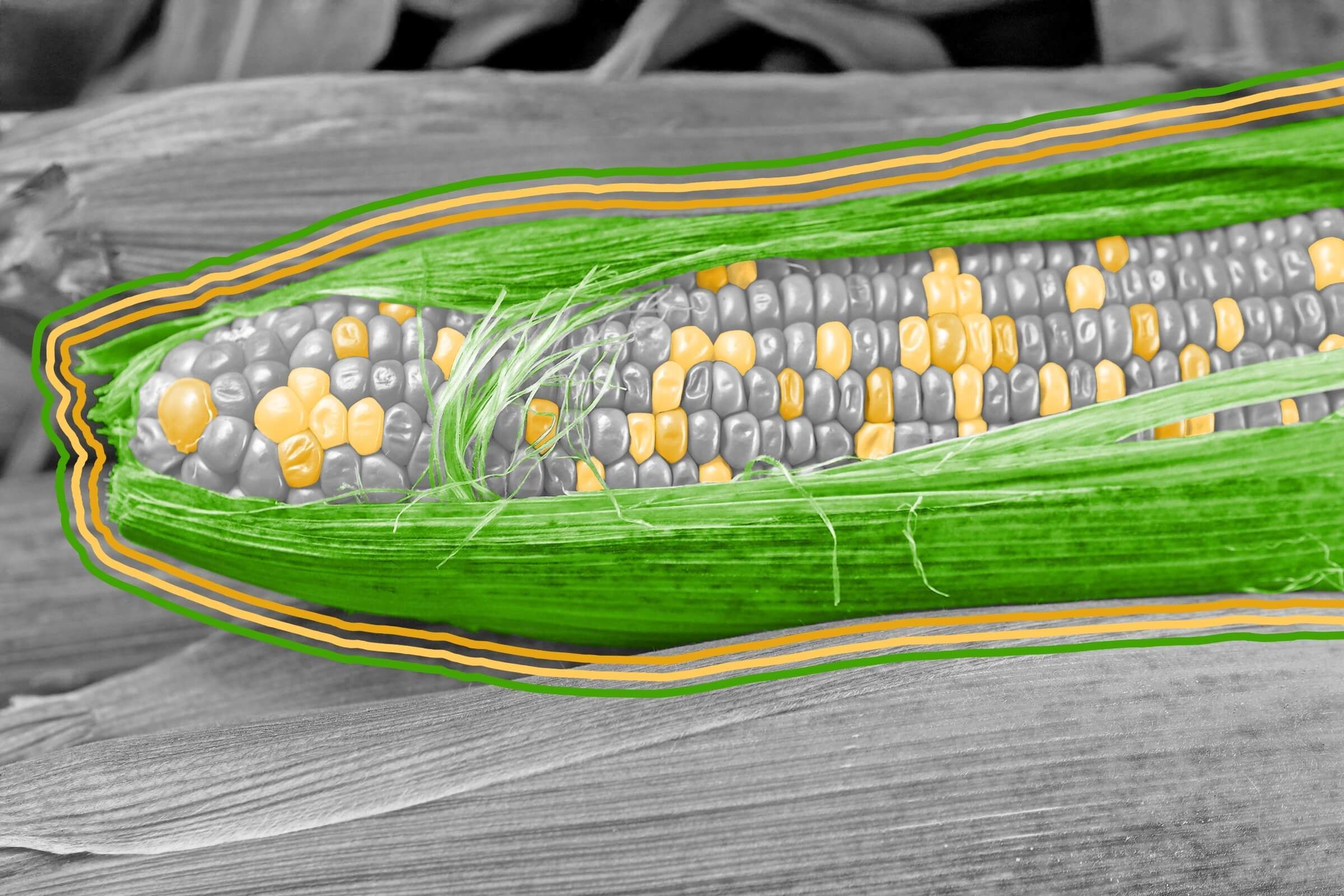
| One of the oddest things about corn is the even number of rows (i.e., the kernels running lengthwise from end to end) you'll find on almost every single ear. This is due to corn's innate genetic programming, which instructs each individual ridge of kernels to double during early development (assuming normal growth conditions). The ridges continue to double until the cob is full, as there's virtually always room for each row to double at least once barring any rare and prohibitive growth abnormalities. This results in an even total number of rows, irrespective of how many rows there were to begin with. These rows typically form during the early weeks of the vegetative process, several months before the plant reaches maturity and is ready to be harvested. While the total number of rows will almost certainly be even, you may end up with eight, 14, or 20 depending on external growth conditions (e.g., water supply, nutrient deficiencies, crop disease, etc.). Those same factors affect the number of kernels in each row as well. According to FoodReference.com, a typical ear will have about 800 kernels and 16 rows. Though an even number of rows is the overwhelming standard, it's entirely possible for there to be an odd number in rare circumstances. Certain inbred varieties may develop genetic mutations that inhibit proper growth. Abnormal weather and insect infestations can also stymie corn's natural biological development, resulting in an odd total number. However, those instances are uncommon and far from the norm. | 






No comments:
Post a Comment