What does 'auld lang syne' mean? | | When you're making New Year's toasts and singing "Auld Lang Syne," do you know what you're saying? This traditional song has very old roots. | |  | Bennett Kleinman |
|
| |  | | I f you're partying when the clock strikes midnight on New Year's, you're likely doing one of three things: laying a big smooch on a loved one, downing a flute of bubbly, or belting out the lyrics to the classic "Auld Lang Syne." Many of us can sing along with the opening line of "Should old acquaintance be forgot," but what does the titular phrase actually mean? To better understand auld lang syne, let's travel back in time to Scotland in the 17th century.
The Oxford English Dictionary defines auld lang syne as a Scottish phrase meaning "times long past," "times long ago," or "old times," and it's used to evoke memories of old relationships and loyalties. The enduring popularity of the phrase is thanks to the Scottish poet Robert Burns, who wrote a 1788 song titled "Auld Lang Syne," which was later published in 1796. But Burns was known for finding inspiration in folk songs and improving upon them. Sir Robert Ayton, one of the earliest Scottish poets to write in standard English, wrote a poem titled Old Long Syne in the 1600s, but it wasn't published until long after his death in 1711. Some believe that Burns drew inspiration from this earlier poem. |
| | Continue reading | |  |
|
Emoji Decoded | |  | | Bottle with Popping Cork | | | Meaning: Shows a champagne bottle with a cork popping off, typically representing celebration.
Evolution: This emoji is often used in conjunction with Clinking Glasses 🥂 to indicate festivities, particularly New Year's Eve celebrations or weddings.
Usage: [New Year's Eve post at midnight:] 3...2...1... Happy New Year! 🍾 2026 here we come! ✨ |
|
| | Bottle with Popping Cork | | | Meaning: Shows a champagne bottle with a cork popping off, typically representing celebration.
Evolution: This emoji is often used in conjunction with Clinking Glasses 🥂 to indicate festivities, particularly New Year's Eve celebrations or weddings.
Usage: [New Year's Eve post at midnight:] 3...2...1... Happy New Year! 🍾 2026 here we come! ✨ |
|
| |
Have you read? | | 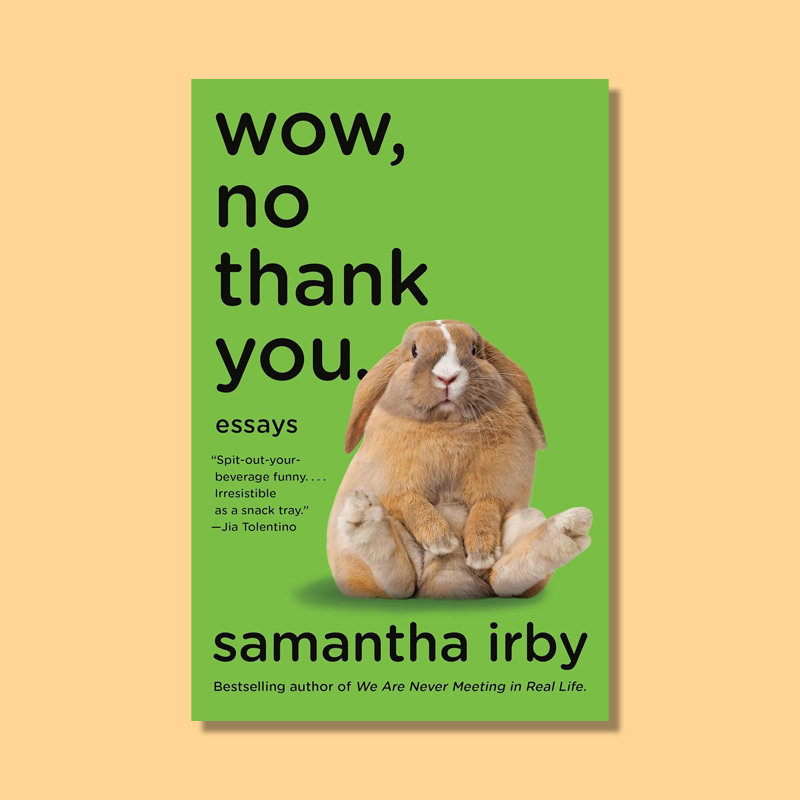 | | Wow, No Thank You. | | | | Bestselling essayist Samantha Irby brings her side-splitting wit to this collection of laugh-out-loud essays. Highlights include Irby's self-deprecating musings on awkward book tours and the slow chaos of turning 40. Irby transforms life's everyday absurdities into cringeworthy stories that are painfully relatable, refining oversharing into an art form. | | | | Samantha Abernethy, Word Smarts Writer | | | | We independently evaluate all recommended products and services. If you click on links we provide, we may receive compensation. |
|
| | Wow, No Thank You. | | | | Bestselling essayist Samantha Irby brings her side-splitting wit to this collection of laugh-out-loud essays. Highlights include Irby's self-deprecating musings on awkward book tours and the slow chaos of turning 40. Irby transforms life's everyday absurdities into cringeworthy stories that are painfully relatable, refining oversharing into an art form. | | | | Samantha Abernethy, Word Smarts Writer | | | | We independently evaluate all recommended products and services. If you click on links we provide, we may receive compensation. |
|
| |
You might also like | |  | | | | Why Do We Say 'Cream of the Crop'? | | To quote the legendary "Macho Man" Randy Savage, "the cream rises to the top." But in another idiomatic context, "cream" doesn't have anything to do with dairy. |
| | | |
|





No comments:
Post a Comment