Is it 'that doesn't phase me' or 'faze me'? | | You've probably used this common phrase without realizing you might be saying it wrong. Which version is the correct one, and why does it matters? | |  | Bennett Kleinman |
|
| |  | | T here are some phrases we've likely said a million times without thinking about how they're written. Is it "bear with me" or "bare with me"? "Bows of holly" or "boughs of holly"? "Hear, hear!" or "here, here!"? (The answers, in order, are "bear," "boughs," and "here," but we'll review these and more in another edition.) Today, let's talk about one confusing phrase in particular: Is it "that doesn't phase me" or "that doesn't faze me"?
"Phase" and "faze" sound identical, but, like all homophones, they have distinct meanings and uses. "Phase" is a noun that means "a distinct period or stage in a series of events or a process of change or development" — think of the phases of the moon. It can also be used as a verb, as in "phase out," but that's a newer 20th-century term, related to eliminating something in phases. "Faze" is a verb that means "to disturb or disconcert (someone)." The early 19th-century word is a variant of the Old English feeze, which meant "to frighten" or "to alarm." |
| | Continue reading | |  |
|
Emoji Decoded | | 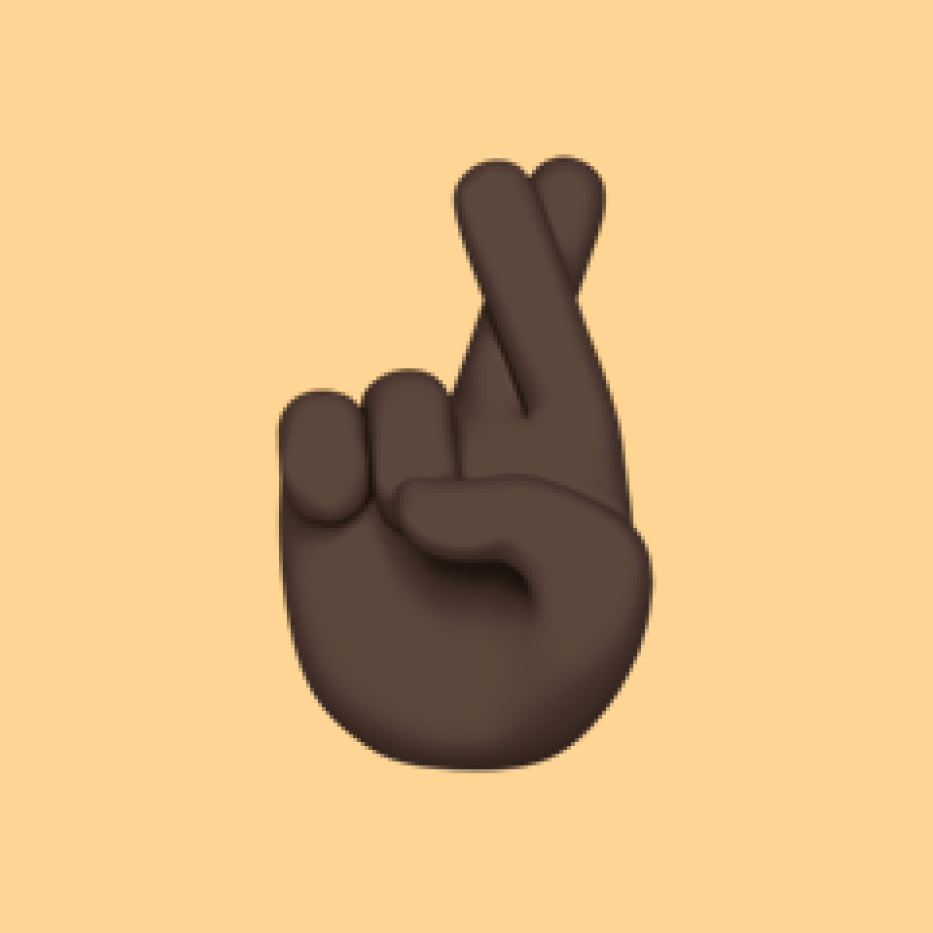 | | Crossed Fingers | | | Meaning: Indicates fingers crossed for luck or to express hope that something will happen.
Evolution: While the hand gesture itself dates back hundreds of years, the emoji wasn't added until 2016. It's most commonly used to indicate genuine hope, but a fringe usage might be to pair it with a white lie or obvious exaggeration — it's similar to how children cross their fingers behind their backs when fibbing.
Usage: [Text to the house group chat:] I made cookies this morning, but I'll try to save some for you 🤞🤞 |
|
| | Crossed Fingers | | | Meaning: Indicates fingers crossed for luck or to express hope that something will happen.
Evolution: While the hand gesture itself dates back hundreds of years, the emoji wasn't added until 2016. It's most commonly used to indicate genuine hope, but a fringe usage might be to pair it with a white lie or obvious exaggeration — it's similar to how children cross their fingers behind their backs when fibbing.
Usage: [Text to the house group chat:] I made cookies this morning, but I'll try to save some for you 🤞🤞 |
|
| |
Have you read? | |  | | Murder Your Darlings | | By Jenna Blum | | In "Murder Your Darlings," two novelists fall in love, but it's not as simple as "happily ever after." Writer Sam receives fan mail from the far more famous novelist William, and the two strike up a correspondence that leads to trysts along their book tours. But then the old writing maxim "murder your darlings" turns sinister when other writers start turning up dead. This suspense novel is recommended for fans of murder mysteries and meta novels about writers writing novels. | | | | Samantha Abernethy, Word Smarts Writer | | | | We independently evaluate all recommended products and services. If you click on links we provide, we may receive compensation. |
|
| | Murder Your Darlings | | By Jenna Blum | | In "Murder Your Darlings," two novelists fall in love, but it's not as simple as "happily ever after." Writer Sam receives fan mail from the far more famous novelist William, and the two strike up a correspondence that leads to trysts along their book tours. But then the old writing maxim "murder your darlings" turns sinister when other writers start turning up dead. This suspense novel is recommended for fans of murder mysteries and meta novels about writers writing novels. | | | | Samantha Abernethy, Word Smarts Writer | | | | We independently evaluate all recommended products and services. If you click on links we provide, we may receive compensation. |
|
| |
|





No comments:
Post a Comment