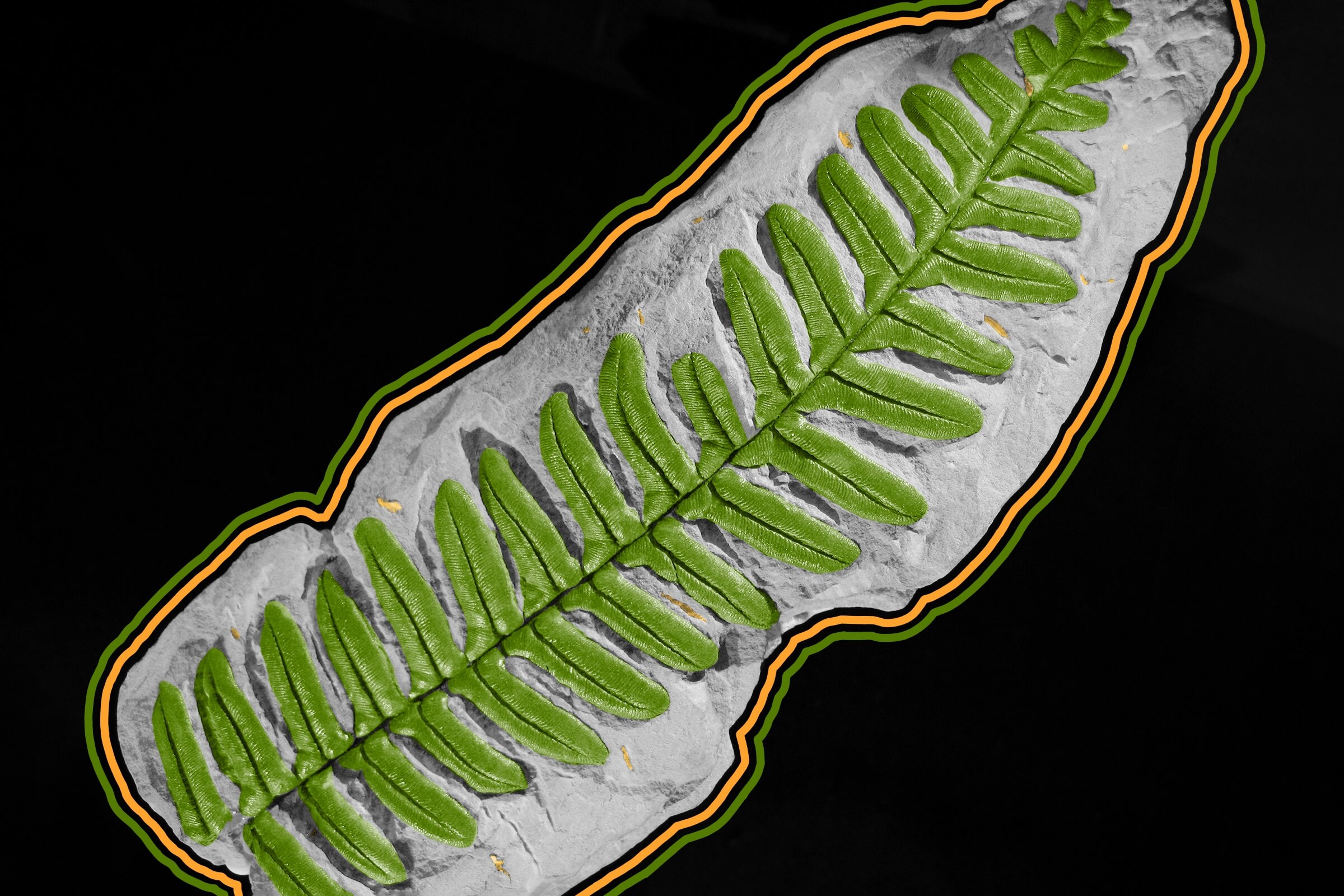
| When we think of where plants come from, we normally picture seeds: acorns dropping from oak trees or dandelion seeds floating on the breeze. But plants actually existed long before seeds arrived on the scene. Land plants likely emerged from ocean algae about 500 million years ago, but fossil records reveal the earliest seed plants didn't appear until approximately 365 million to 385 million years ago. During that vast stretch of time, plants relied on spores for reproduction — tiny, single-celled packages that could scatter and grow into new plants. An early group of plants called progymnosperms began manufacturing two sets of specialized spores, male and female. Those were shed from the plant and, if they landed close together, fertilization could take place, producing a new embryo and ultimately a whole new plant. Eventually, however, evolution came up with seeds as a better solution. With their multiple cells, seeds can be much larger than spores and can sit inside protective shells. Seeds can carry their own stores of food, providing fledgling plants with an immediate source of energy, and they're also far more adaptable and resilient in various environments, allowing them to lay dormant for hundreds — and in some cases thousands — of years. Today, there are almost 400,000 known species of plants, and the vast majority of them produce seeds. But spore-producing plants — including mosses, ferns, fungi, and algae — still thrive in suitable habitats, serving as living reminders of how plants conquered the land long before seeds existed. | 





No comments:
Post a Comment