 |
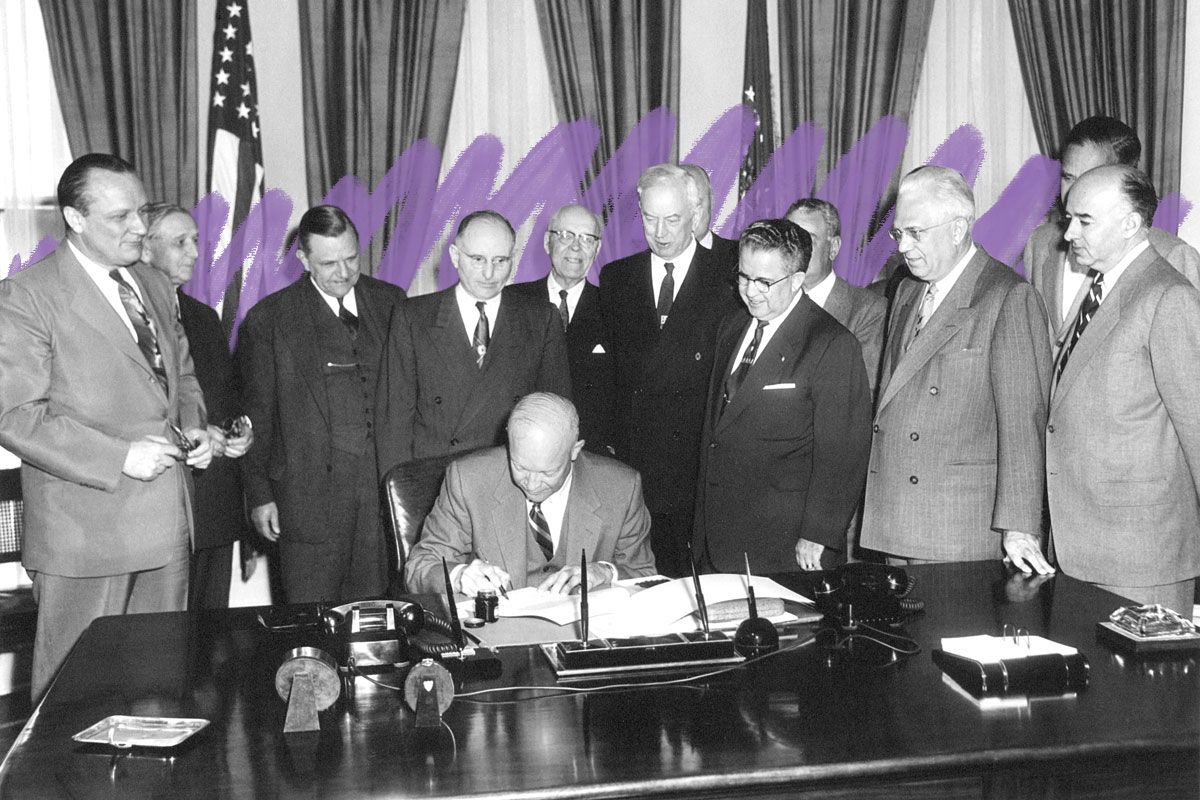
Dwight D. Eisenhower's road trip inspired the interstate highway system. |
Famous Figures |
 |
| |
After missing the first leg of the trip to Frederick, Maryland, Eisenhower joined the expedition, known as the First Transcontinental Motor Convoy, for the remainder of its two-month, 3,000-mile journey along the Lincoln Highway to California. As per the requirements of his involvement, the young officer dutifully submitted a report that analyzed the performances of the various military vehicles, the discipline shown by participating soldiers, and the quality of the roads encountered along the way. He also offered suggestions on how to allocate resources toward improving highway conditions — demonstrating how the journey piqued his interest in a future United States linked by a system of well-maintained roads. | |
A quarter-century later, Eisenhower, as supreme commander of the Allied forces during World War II, observed how Germany's modern highways enabled the speedy, efficient transport of materiel. His interest in an improved road network again ignited, Ike made the development of America's highways a centerpiece of his domestic agenda upon being elected U.S. president in 1952. His vision became a reality with the passage of the Federal-Aid Highway Act of 1956, which established the Interstate Highway System, the vast network of roads that crisscross the country today. |
 | |||||||||
By the Numbers | |||||||||
| |||||||||
| |||||||||
| |||||||||
| |||||||||
The First Transcontinental Motor Convoy was a hard and dangerous trip. | |||||||||
Eisenhower's memoir recounts the welcome reception the First Transcontinental Motor Convoy enjoyed in some towns and the practical jokes he and a buddy enjoyed at the expense of recruits, but overall, this trip was no joy ride. Along with weathering the regular mechanical malfunctions of its vehicles, the convoy's personnel endured numerous tense and even life-threatening situations, especially as they navigated the lesser-developed regions of the West. Once, a massive rainstorm turned the Nebraskan dirt road into a muddy, slippery mess that required 25 trucks to be pulled out of ditches. Another harrowing situation saw one of the vehicles lost for good when it tumbled over the side of a mountain. The War Department's official report noted the expedition's 230 motor-related accidents, as well as the difficulties endured by travelers due to insufficient sleep and shelter, fluctuating temperatures, and sand storms. Small wonder, then, that the convoy's members received medals upon reaching San Francisco, although there's little to commemorate this pioneering mission today besides the Zero Milestone marker of the journey's starting point on the Ellipse south of the White House. | |||||||||

| |||
Recommended Reading | |||
 | |||
Science & Industry | |||
| |||
 | |||
Science & Industry | |||
| |||
| + Load more | |||
| |||||||||||||||||||||||||||||||||||||||||||||||||||||||








| |||||||||
| 700 N Colorado Blvd, #513, Denver, CO 80206 | |||||||||

No comments:
Post a Comment