 |
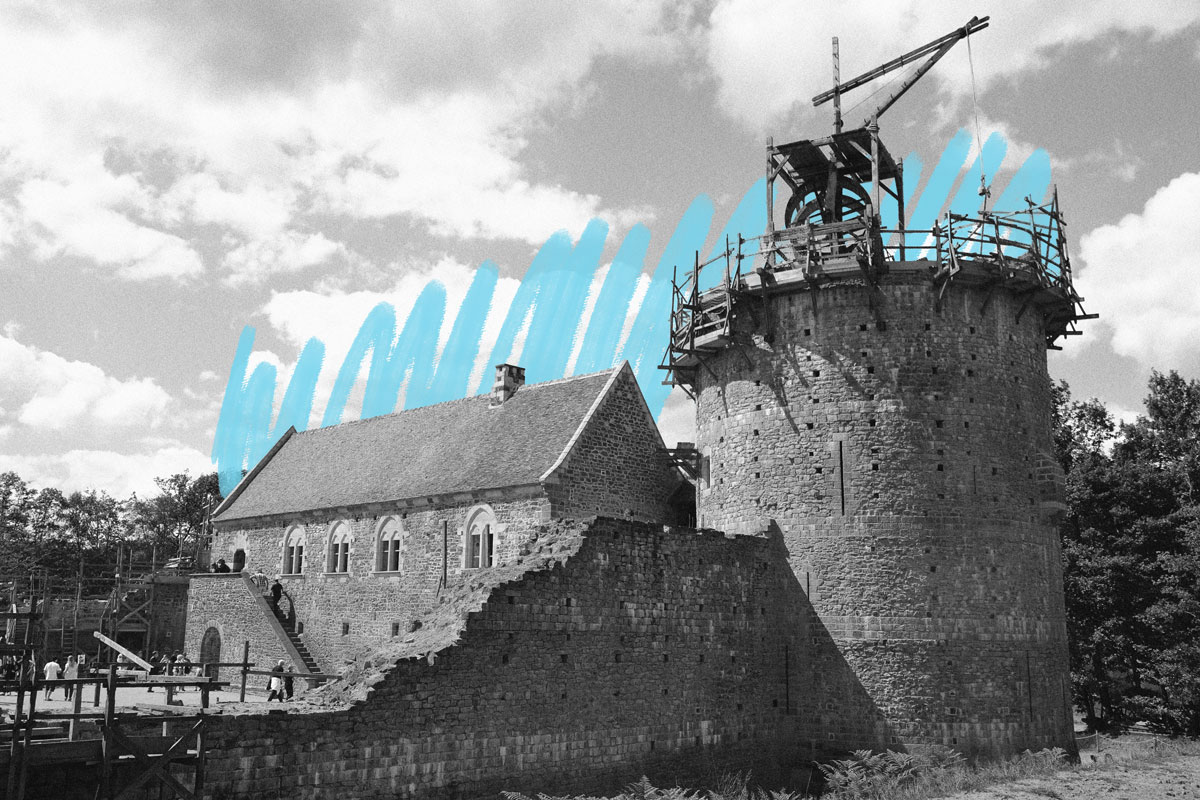
There's a new medieval castle being built. |
Science & Industry |
 |
| |
Guédelon Castle's origins stem from the discovery of 13th-century ruins on a nearby property owned by entrepreneur Michel Guyot. Initially intending to reconstruct the medieval castle, Guyot instead decided to build a new one from scratch, and pulled together a team to secure funding and the artisans needed to turn the vision into reality. They set out to build the castle using only tools, techniques, and materials that would have been available in the 13th century. The ground rules forced workers to improvise as they tried to figure out how to properly mix ceramic, trowel mortar, and raise scaffolding without help from modern construction methods. | |
This trial-and-error process of creating the structure with era-specific technology has given participants a hands-on understanding of just how a medieval castle takes shape, something that's all but impossible to determine by simply examining old drawings and records. And with the endeavor being sustained by a bustling tourist business, no one seems especially concerned that the initial 20-year timeline has passed with no finish line in sight. Indeed, there are even talks underway regarding the construction of an accompanying church and surrounding village. | |

 | |||||||||
By the Numbers | |||||||||
| |||||||||
| |||||||||
| |||||||||
| |||||||||
The Louvre was initially a castle. | |||||||||
Although the Louvre annually draws more than 8 million visitors to view such masterpieces as the "Mona Lisa" and Venus de Milo, there was a time when its existence served to repel rather than welcome people to the French capital. Constructed in the early 13th century during the reign of King Philippe II, the initial fortress stood guard over the western edge of Paris with a cylindrical keep that reached nearly 100 feet high within a crenellated curtain wall and a moat fed by the waters of the Seine. However, Louvre Castle gradually surrendered its defensive purposes as Paris continued its geographic expansion, and beginning in 1546, the structure was torn down and replaced by a palace to house the French monarchy. While the palace and its additions eventually became the grounds of the national art collection that opened in 1793, remains of the site's medieval origins can still be found in an underground gallery of the now-world-famous museum. | |||||||||

Thank you for supporting our advertisers! | ||
| |||
Recommended Reading | |||
 | |||
U.S. History | |||
| |||
 | |||
Famous Figures | |||
| |||
| + Load more | |||
| |||||||||||||||||||||||||||||||||||||||||||||||||||||||










| |||||||||
| 325 North LaSalle Street, Suite 200, Chicago, IL 60654 | |||||||||
|


No comments:
Post a Comment