 |
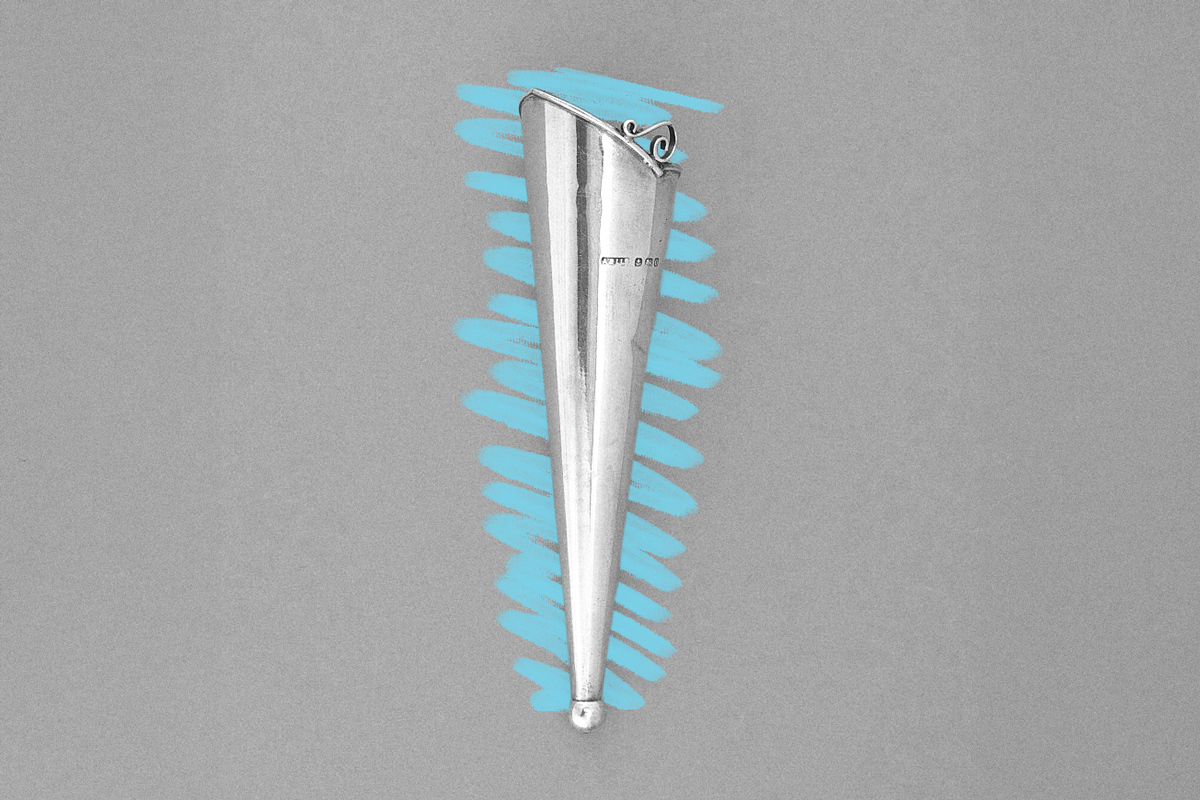
Early cars came with a vase for flowers. |
Science & Industry |
 |
| |
Automotive vases date back to at least the late 19th century and emerged in the United States by 1909, when Ward's Automobile Topics noted that limousines on New York City's ritzy Fifth Avenue had adopted the "Parisian notion." In 1913, Popular Mechanics also credited France with the origin of the trend and published a perhaps-apocryphal origin story of a French automobile manufacturer that appeased an impatient American customer by adding a bouquet holder. | |
These vases came in all kinds of materials and designs, from sterling silver to glowing uranium glass. Some had brackets for mounting, while others included chains for hanging. Initially, they were a luxury item, but by the 1920s they were more accessible to the average consumer. Aftermarket models were widely available in jewelry stores or the Sears catalog. And Henry Ford was so taken with them that he even added them to his assembly line. | |
Today, dashboard flowers are more widely associated with Volkswagen vehicles, although the manufacturer didn't start offering them as an option until the 1950s (a tradition that continued into the 1970s). When the company rebooted the VW Beetle in 1998, one of its many quirky vintage touches was an acrylic vase in the dash. |

 | |||||||||
By the Numbers | |||||||||
| |||||||||
| |||||||||
| |||||||||
| |||||||||
Portable vases were all the rage in the Victorian era. | |||||||||
In upper-class society in Victorian England, people often gave small, tightly wrapped bouquets to friends and romantic prospects. But if you received such a gift at the beginning of a social function, you had to hold it or stash it for the rest of the night, and after hours without water, the flowers got a little wilted. In the 1830s, Queen Victoria helped popularize small, ornate bouquet holders that included a vessel for water and a pin to keep the flowers in place. Many came with a clip or a pin to attach to clothing, or a ring to dangle from your finger or affix to a belt. Others came with little tripods for setting the vase on a surface — and some, while they kept flowers fresh and hands clean, still required carrying. Use declined toward the end of the 19th century, when long-stemmed bouquets went into fashion. | |||||||||

| |||
Recommended Reading | |||
 | |||
Arts & Culture | |||
| |||
 | |||
World History | |||
| |||
| + Load more | |||
| |||||||||||||||||||||||||||||||||||||||||||||||||||||||











| |||||||||
| 325 North LaSalle Street, Suite 200, Chicago, IL 60654 | |||||||||

No comments:
Post a Comment