 |
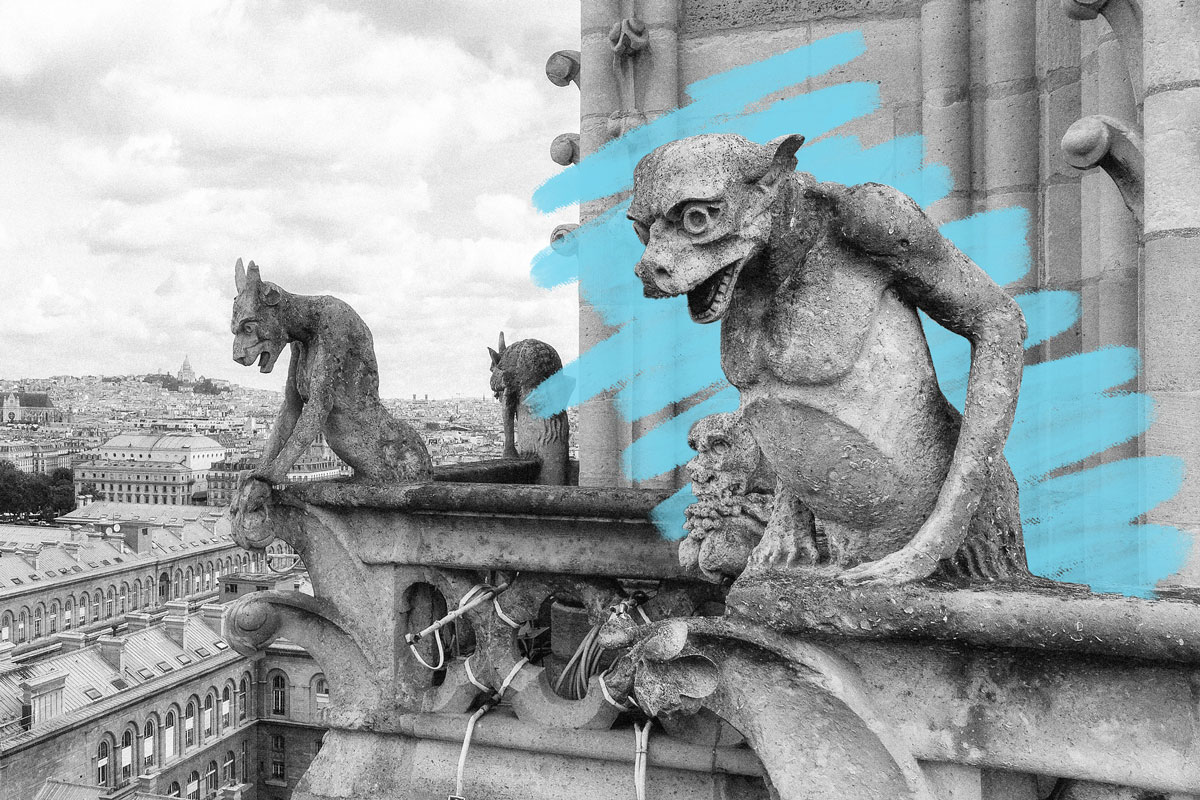
Gargoyles on churches were originally drain pipes. |
Arts & Culture |
 |
| |
The same Old French root gave rise to La Gargouille, a legendary dragon from French folklore that wreaked havoc across Rouen by spewing water and flooding the city. Legend holds that after La Gargouille was burned at the stake, his head remained unscathed. The townsfolk, making the best of an odd situation, decided to put the dragon's head on their church to ward off other beasts who would do them harm — likely reinforcing the modern image of a gargoyle. | |
Gargoyles are older than their name, however, and are believed to date back to antiquity; lion's-head statues that spout water have been found in ancient Rome, Egypt, and Greece. The medieval gargoyles of Notre-Dame are especially well known, though many of them were lost in the 2019 fire that destroyed much of the iconic cathedral. Those that remain have come to symbolize the landmark's centuries of resilience as they continue to watch over it. |
 |
Dating for Mature Adults Who Want More Than Small Talk |
Online dating doesn't always make room for a real connection. DateMyAge brings together people across borders who are interested in conversation and companionship. It gives older singles a straightforward way to get to know someone new. |
*This content is brought to you by our sponsor, which helps keep our content free. |
 | |||||||||
By the Numbers | |||||||||
| |||||||||
| |||||||||
| |||||||||
| |||||||||
A French chapel replaced its gargoyles with grotesques from "Gremlins" and "Alien." | |||||||||
Pop culture grotesques aren't exactly common, but they are out there. Darth Vader has watched over the National Cathedral in Washington, D.C., ever since a 13-year-old won a contest to design a grotesque in 1986. A much smaller house of worship, France's Bethlehem Chapel (Saint-Jean-de-Boiseau), was practically in ruins when stone carver Jean-Louis Boistel was tasked with replacing its 28 grotesques in the 1990s. He turned to pop culture for some of them, namely Gizmo from Gremlins, Alien's eponymous xenomorph, and a robot from the anime series UFO Robot Grendizer. Though unconventional, the designs proved popular with the local children. | |||||||||

| |||
Recommended Reading | |||
 | |||
World History | |||
| |||
 | |||
World History | |||
| |||
| + Load more | |||
| |||||||||||||||||||||||||||||||||||||||||||||||||||||||











| |||||||||
| 325 North LaSalle Street, Suite 200, Chicago, IL 60654 | |||||||||
|


No comments:
Post a Comment