Why do we say 'have an ax to grind'? | | You likely won't encounter a blacksmith grinding an ax today, but the idiom is still relevant. However, the origin story is up for debate. | |  | Stewart Edelstein |
|
| |  | | T he meaning of this idiom depends on whether you're referring to the origin story coming from Benjamin Franklin or Charles Miner, and the spelling of the implement involved depends on whether you are speaking American English ("ax") or British English ("axe").
In Benjamin Franklin's 1791 autobiography, he tells the story of a man who takes a dull, speckled (rusted) ax to a blacksmith to make it perfectly shiny and sharp. The blacksmith agrees, but only if the man turns the grindstone, which is arduous work. As the man keeps turning the grindstone, the blacksmith demands that he work even harder, because the ax is still speckled. The man finally quits, having concluded that a speckled ax is best. |
| | Continue reading | |  |
|
Emoji Decoded | | 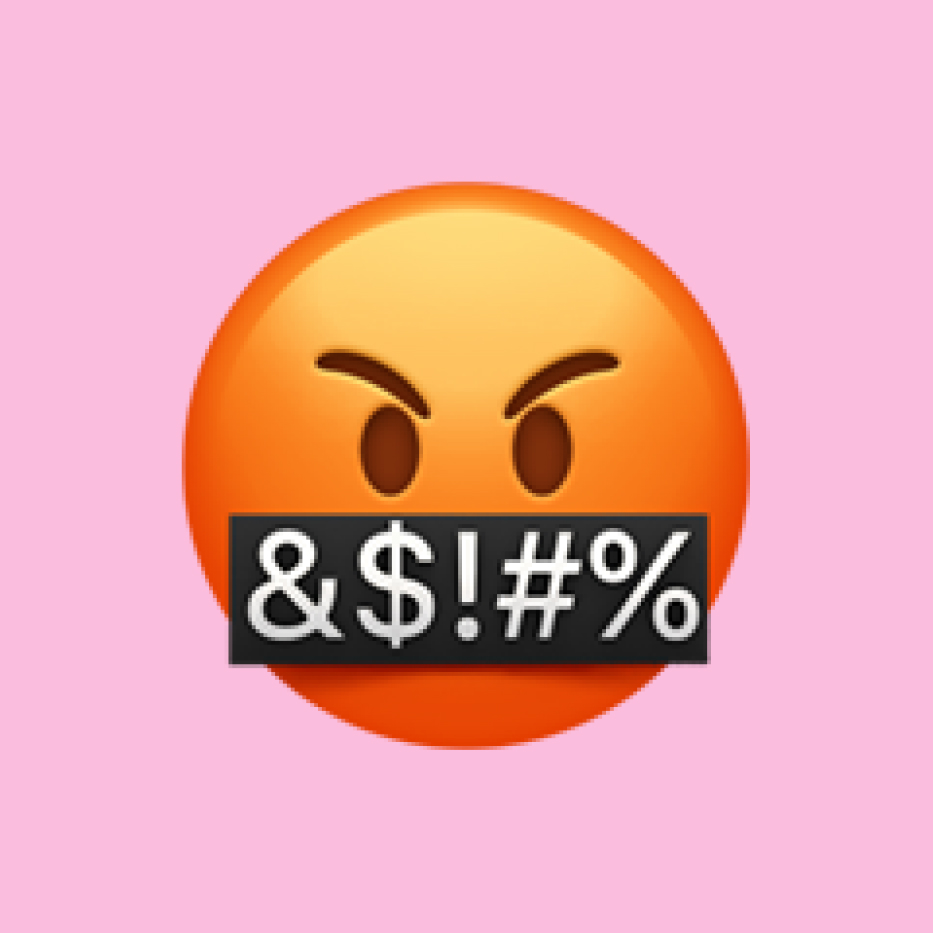 | | Serious Face with Symbols Covering Mouth | | | Meaning: The typographical symbols over the emoji's mouth indicate swear words. This face indicates rage, cursing, and anger.
Evolution: This cursing emoji is fairly straightforward, but the symbols (also known as grawlix) change across platforms. On Samsung they are !#%&$ and on Apple they display as &$!#%.
Usage: Any occasion that calls for a curse word — or a bleeped-out string of curse words — is an opportunity to use the cursing or swearing face, as it's commonly called. |
|
| | Serious Face with Symbols Covering Mouth | | | Meaning: The typographical symbols over the emoji's mouth indicate swear words. This face indicates rage, cursing, and anger.
Evolution: This cursing emoji is fairly straightforward, but the symbols (also known as grawlix) change across platforms. On Samsung they are !#%&$ and on Apple they display as &$!#%.
Usage: Any occasion that calls for a curse word — or a bleeped-out string of curse words — is an opportunity to use the cursing or swearing face, as it's commonly called. |
|
| |
Have you read? | | 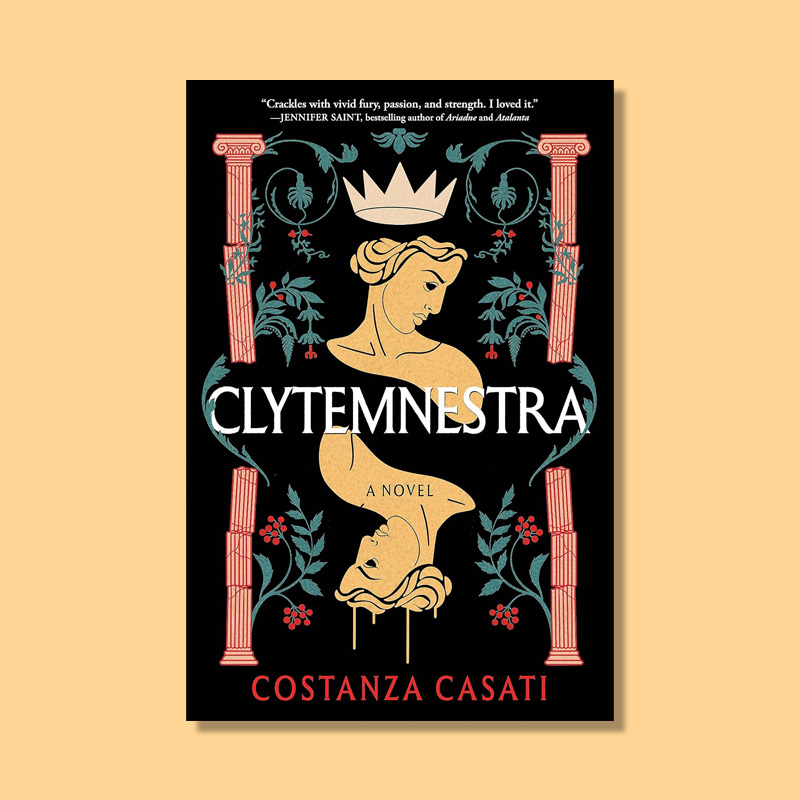 | | Clytemnestra | | By Costanza Casati | | If you love historical fiction set in ancient Greece, in the vein of "Circe" by Madeline Miller, this is your next read. Clytemnestra is a thorny figure in Greek mythology, but she was put into impossible circumstances. Sister of Helen, Clytemnestra was more of a political operator than a great beauty. Author Casati delves into her motivations, from her young life in Sparta to her time as Agamemnon's wife, and what it felt like to lose her child. | | | | Julia Rittenberg, Word Smarts Writer | | | | We independently evaluate all recommended products and services. If you click on links we provide, we may receive compensation. |
|
| | Clytemnestra | | By Costanza Casati | | If you love historical fiction set in ancient Greece, in the vein of "Circe" by Madeline Miller, this is your next read. Clytemnestra is a thorny figure in Greek mythology, but she was put into impossible circumstances. Sister of Helen, Clytemnestra was more of a political operator than a great beauty. Author Casati delves into her motivations, from her young life in Sparta to her time as Agamemnon's wife, and what it felt like to lose her child. | | | | Julia Rittenberg, Word Smarts Writer | | | | We independently evaluate all recommended products and services. If you click on links we provide, we may receive compensation. |
|
| |
You might also like | | 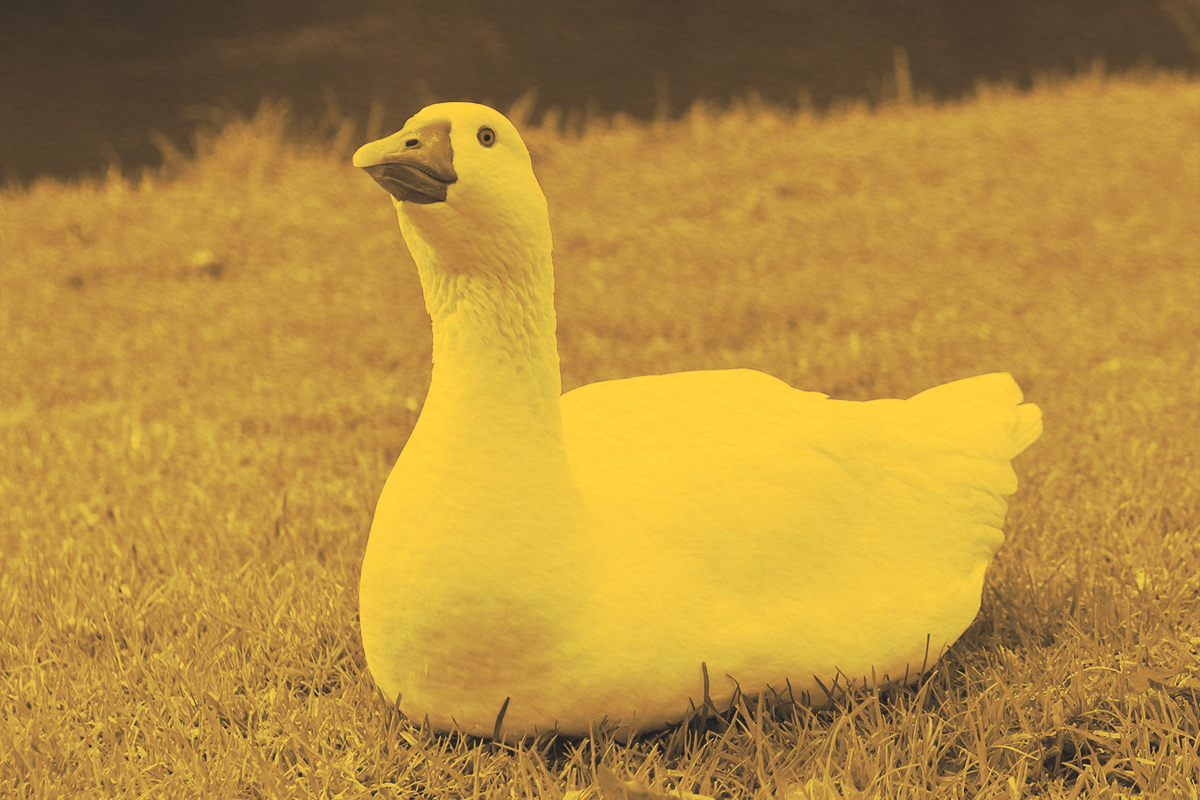 | | | | 8 Idioms Pulled From the Animal Kingdom | | From cash cows to proud peacocks, the English language can feel like a figurative zoo. Let's look at the meanings and origins behind some popular animal idioms. |
| | | |
|





No comments:
Post a Comment