Dear Reader,
Happy Tuesday.
Today is Tuesday, February 10th.
What a great day to be alive. I'm grateful to be here with you today.
Today I want to address some of the questions I've been getting from members.
Last week, we recommended closing 10 positions in the Behind the Markets model portfolio — either in whole or in part. That's a big move for us, and there were a couple of important reasons behind it.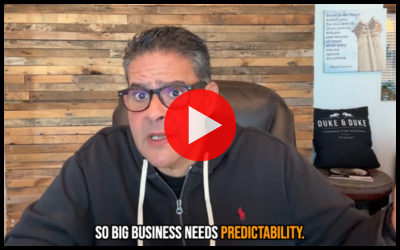
First, we wanted to pull our sails in a little bit.
I know the market looks good on the surface. We're hitting new highs. Headlines are positive. But underneath the surface, there are some things that have been concerning me.
We made those sell recommendations at the beginning of last week. And then, in the days that followed, we saw that incredible volatility.
What does that tell you?
The market sold off hard… and then rebounded sharply. On Friday, it was up more than 1,000 points, and the Dow hit an all-time high at 50,000.
That tells you a couple of things.
Number one, it tells you there are other investors like me who have been leaning into selling strength.
And remember something — bear markets don't just boom and appear overnight.
What typically happens is that savvy, experienced money sells into the last bit of strength. And the liquidity is often provided by less sophisticated buyers who are late to the party.
So on the surface, things look fine.
AI boom.
Tariffs.
A manufacturing renaissance.
But when you look underneath the surface — and this is why many institutional and professional investors have been trimming exposure — the data looks a little soggy, for lack of a better word.
Let me give you a few examples.
The number of open jobs in the U.S. fell by nearly a million last year, according to the Labor Department.
Private-sector job growth came in at just 22,000 jobs in January, according to ADP — less than half of what economists were expecting.
To paraphrase a line I like:
We have a C-minus economy supporting an A-plus stock market.
That gap is concerning.
And markets like this are exactly when I prefer to sell into strength and bring in our sails a bit.
To be clear, I did not recommend selling our core positions. But when you dig deeper into the data, you can see why caution makes sense.
Here's another one.
The delinquency rate on office commercial mortgage-backed securities jumped 103 basis points in January to a record 12.3%.
That's not just bad — it surpasses the post-2008 financial crisis peak by 1.6 percentage points.
Over the past three years, delinquency rates in office real estate have surged more than 600%.
Commercial real estate is in a full-blown crisis.
Here's another signal.
Institutional investors are aggressively unloading U.S. equities. Hedge funds sold single stocks at the fastest pace since October last Wednesday.
What are they doing?
They're locking in profits.
Reducing exposure.
Raising cash.
And in some cases, short selling.
In other words, the professionals are seeing the same things I'm seeing.
The economy is still moving forward — but it's chugging along. And the wider the gap between economic reality and market prices, the more dangerous things become near the top.
On top of that, we've talked about how AI is starting to eat the lunch of software companies. I think this is far more dangerous to certain business models than most people realize right now.
The same core issues I laid out in Midnight in America are still here:
Debt.
Office real estate stress.
Deficits.
China and Taiwan.
And now we're seeing employers hesitate to add jobs.
We thought the "big, beautiful bill" would bring predictability — and in some areas, it has. But when tariffs are introduced and reversed unpredictably, businesses freeze.
After cutting a trade deal with Europe, companies start planning manufacturing investments. Then suddenly there's talk of tariffs tied to Greenland.
So businesses stop.
Then start.
Then stop again.
The same thing is happening with Mexico and Canada.
Automakers rely on predictable trade rules. They need to know:
Do we build the plant?
Do we wait?
Are the tariffs permanent or temporary?
Big business needs predictability.
The executives I speak with say this privately — even if they won't say it publicly.
Add to that AI's growing impact on employment, and you start to see why job growth is slowing.
So for those of you asking why we're selling while the market is hitting new highs — this is why.
When volatility increases like this, it tells you there's a real debate happening between bulls and bears.
You see aggressive buying of dips…
And you see professionals using those rallies as opportunities to sell.
That's what we're doing.
We're trimming speculative positions.
Taking profits on stocks with big runs.
And sitting back with patience.
We don't have to swing at every pitch.
And historically, that discipline has served us very well.
That's why instead of chasing risky AI trades or companies spending billions without clear returns… we've been focusing on a "secret" Nvidia partner that sits at the center of the AI buildout — working behind the scenes with all three major hyperscalers.
Whether Amazon, Microsoft, or Google wins the next phase doesn't really matter to this business. Because they all rely on it either way.
That's why this is our #1 AI trade for 2026.
This is the kind of positioning we're looking for in an environment like this.
Anyway, that's all I have for today.
Have a wonderful day, and I'll see you tomorrow.




No comments:
Post a Comment