 |
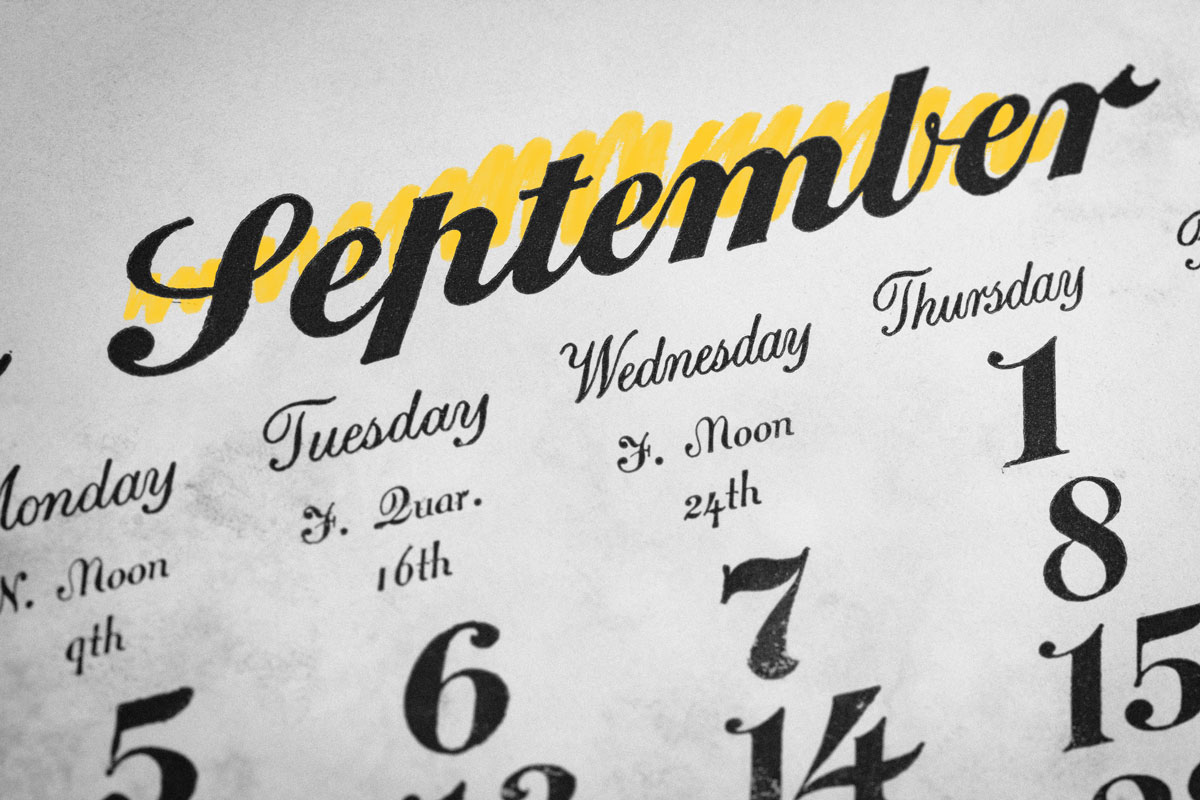
September was originally the seventh month of the year. |
World History |
 |
| |
The month of September was originally part of the Roman republican calendar, which was used in ancient Rome for hundreds of years before the debut of the Julian calendar in 46 BCE. At first, the Roman republican calendar included just 10 months. The last six months all corresponded to their Latin numbers, which is how not just September but also October (meaning "eighth"), November ("ninth"), and December ("tenth") all got their names. (The fifth month, Quintilis, and the sixth month, Sextilis, were later renamed after Roman rulers.) | |
January and February joined the calendar later as the first and last month, respectively, but nobody changed September's name, despite it quite literally meaning "seventh" for the Latin speakers in ancient Rome. The name stuck even after February shifted to second in order in 452 BCE, meaning that September has been the ninth month for much longer than it was ever the seventh month of the year. |

 | |||||||||
By the Numbers | |||||||||
| |||||||||
| |||||||||
| |||||||||
| |||||||||
The Roman republican calendar had a messy leap month. | |||||||||
The Roman republican calendar had more than a few issues. The first draft was only 304 days long, leaving two lunar cycles unnamed. The addition of January and February brought the total days up to 355, which was still more than a week shy of a solar year. So every other year, the month of Mercedonius — essentially a leap month — would pop up at the end of February. But this discretionary month caused some problems of its own. Because implementation was left to the pontifex, a council of priests, the calendar was weaponized to lengthen or shorten political appointments. When Julius Caesar took office, the calendar was so out of sync that he declared a onetime 445-day year to realign it with the solar year before implementing the Julian calendar. | |||||||||

| |||
Recommended Reading | |||
 | |||
U.S. History | |||
| |||
 | |||
Arts & Culture | |||
| |||
| + Load more | |||
| |||||||||||||||||||||||||||||||||||||||||||||||||||||||











| |||||||||
| 325 North LaSalle Street, Suite 200, Chicago, IL 60654 | |||||||||

No comments:
Post a Comment