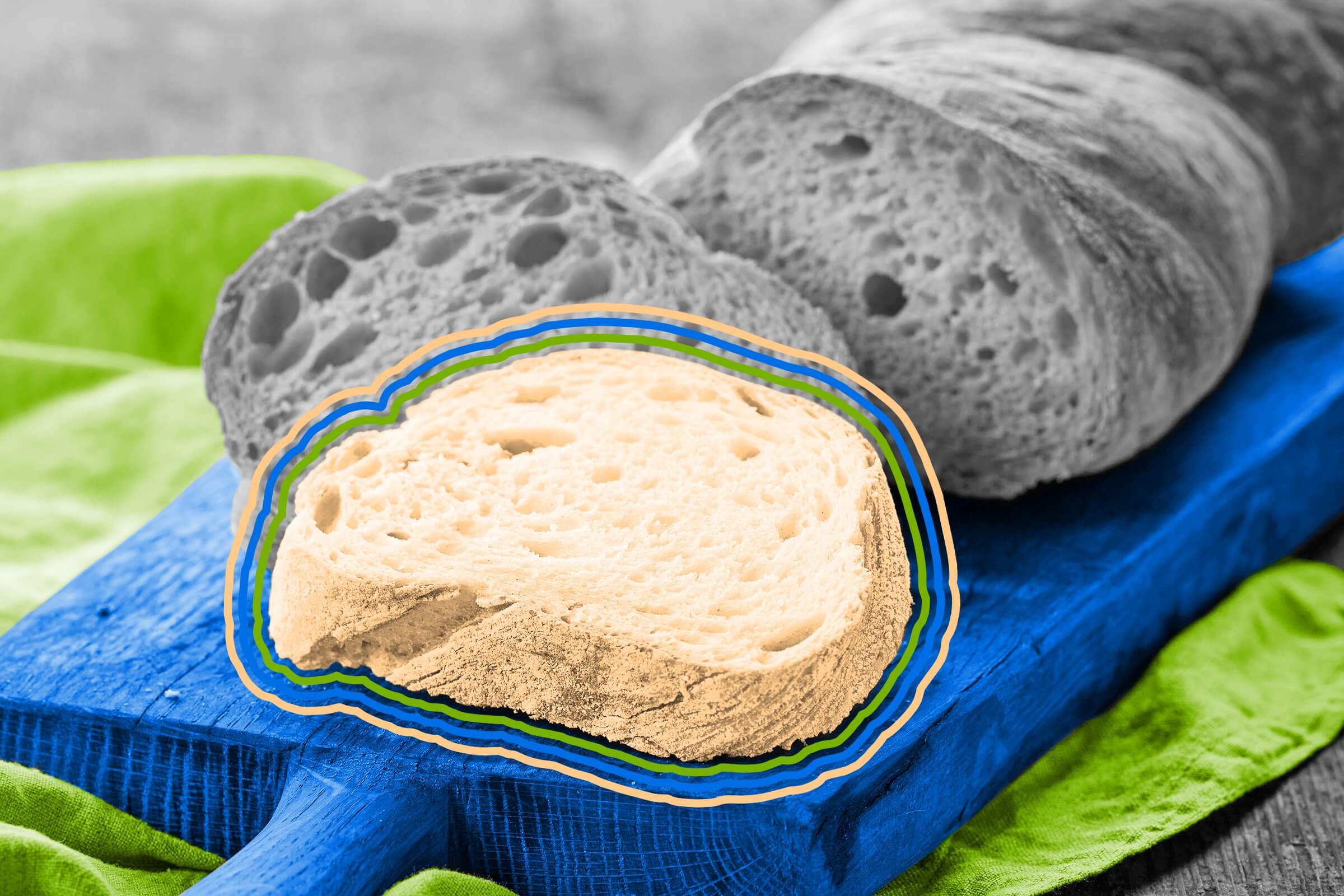
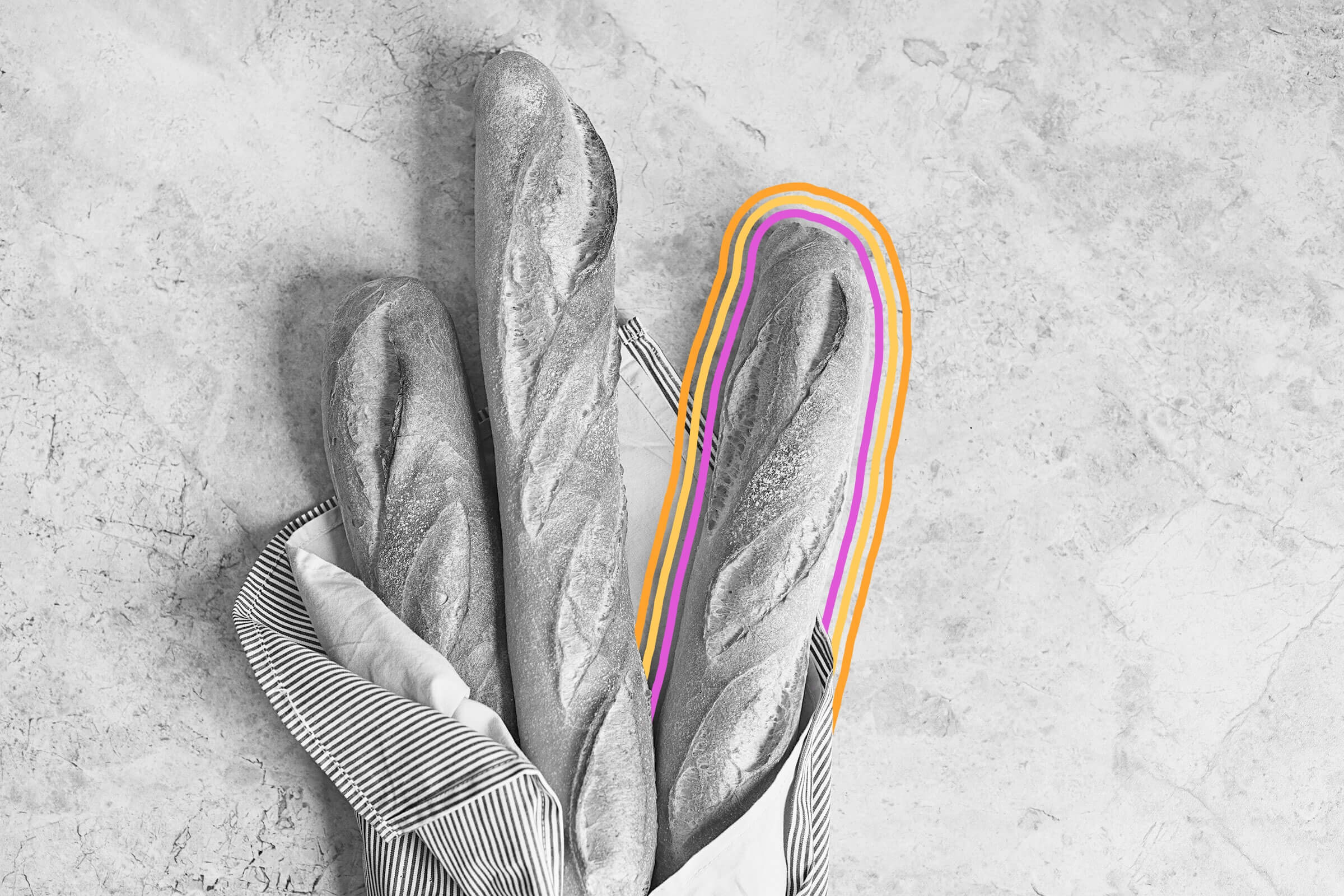
| While Italian bread varieties such as focaccia and pane toscano have existed for centuries, ciabatta came into existence around the same time as MTV and Macintosh computers. It was invented in 1982 by baker and miller Arnaldo Cavallari, who lamented the growing popularity of French baguettes in Italy. Fearing those imported loaves could negatively affect his business, Cavallari got to work creating a similar, commercially viable yet authentically Italian alternative to baguettes. Cavallari enlisted the help of two expert flour bakers, seeking to create a softer, wetter dough that would emulate the crispy crust of a baguette while concealing fluffier bread on the inside. After weeks of testing, the team achieved their goal, dubbing the new bread ciabatta polesana. In a 1999 interview with The Guardian, Cavallari said he picked the name ciabatta — which means "slipper" in Italian — because of the loaf's shape, while polesana refers to the Polesine region where he lived. Knowing he had a hit on his hands, Cavallari copyrighted the name and sold his recipe to various local restaurants. Ciabatta soon went global, making its way to the U.S. in 1987. | 





No comments:
Post a Comment