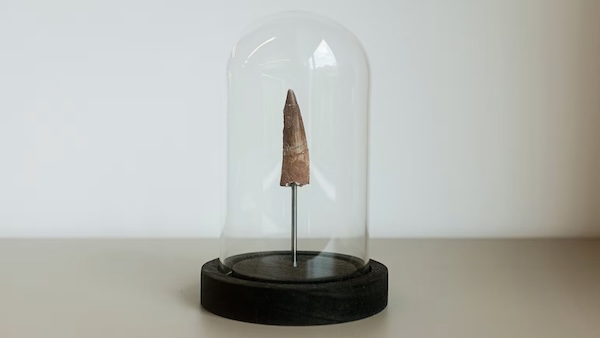
"It stands to reason that a 95-million-year-old tooth shipped to my home would have a rich past. But what ensued after I bought it online for about $100 revealed how, for such relics and those who covet them, the present is in some ways much more complicated. … It then became impossible to resist the thrill of purchasing a piece of one of the largest predators that ever existed: Spinosaurus, a semiaquatic meat-eater that could reach almost 60 feet (about 18 meters) in length — longer and heavier than Tyrannosaurus rex. When the package arrived, in a pretty glass dome and with a preprinted certificate of authenticity that stated it came from North Africa … But some obvious cracks that suggested the specimen had perhaps been patched together from multiple fragments left me wondering: Was it real?" |
|
|
Some people look forward to family time during the holidays. Others have more… personal plans. If you're in the latter group, consider this your seasonal upgrade. We-Vibe's Black Friday sale is still in full swing, with up to 65% off the kind of toys that make your silent night anything but. From best sellers like the suction-powered Melt to the ultra-intense Tango bullet, it's basically a one-way ticket to the naughtiest nice list out there. Shop now through 12/8 to save. [Ad] |
|
|
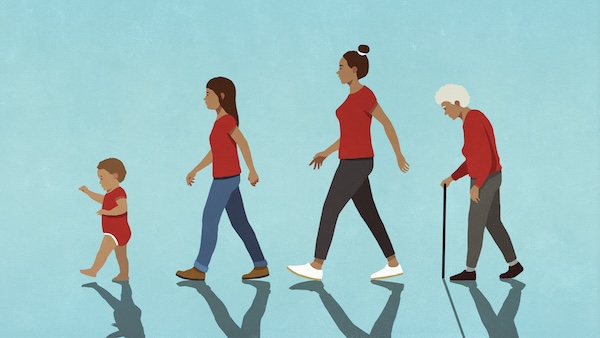
"A team of neuroscientists at the University of Cambridge in the United Kingdom identified five broad phases of brain structure over the course of an average human life. These eras occur as the human brain rewires to support the different ways of thinking while we grow, mature, and eventually decline. … In the study, they compared the brains of 3,802 people between ages of zero and 90, using datasets of MRI diffusion scans. These types of MRIs map neural connections by following how water molecules move through brain tissue. They detected five broad phases of brain structure in the average human life that are split up by four pivotal turning points between birth and death when our brains reconfigure." |
|
|
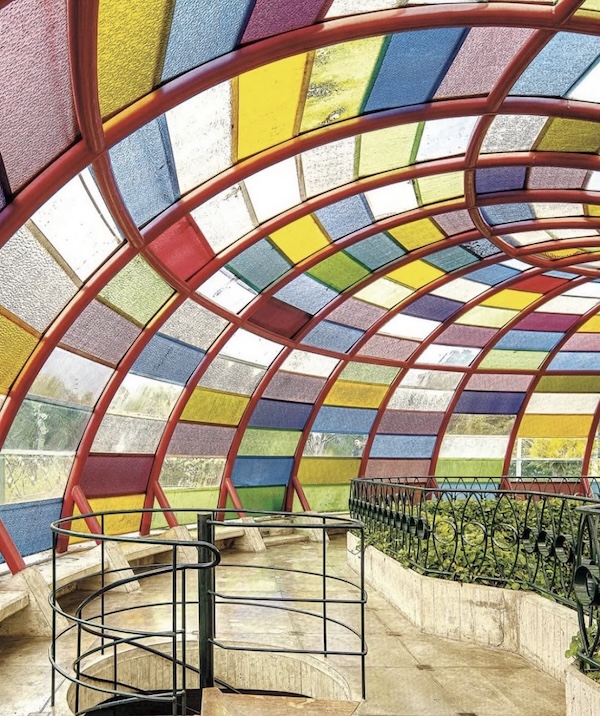
"There are many purposes that spots and stripes serve in nature, but how they form has been more of a mystery to scientists. Now, researchers have advanced their breakthrough theory — and it could help us design materials that can respond to the environment and change color on demand. University of Colorado Boulder researchers have closed the gap between math and biology, moving from a neat physics simulation of their animal-pattern theory to something that explains how those crisp yet imperfect designs actually arise in nature. 'Imperfections are everywhere in nature... We proposed a simple idea that can explain how cells assemble to create these variations.'" |
|
|
Look, if learning a new language is the secret to keeping our brains spry, then we're all just one "Ou est la bibliotheque?" away from immortality. Babbel makes it easy to sneak some linguistics into your daily scroll with real human-taught lessons that won't make you scream into the void. And with lifetime access — plus an AI Conversation Partner you can chat with — it's language learning for grown-up brains that still wanna party. Save with code LEARN. [Ad] |
|
|
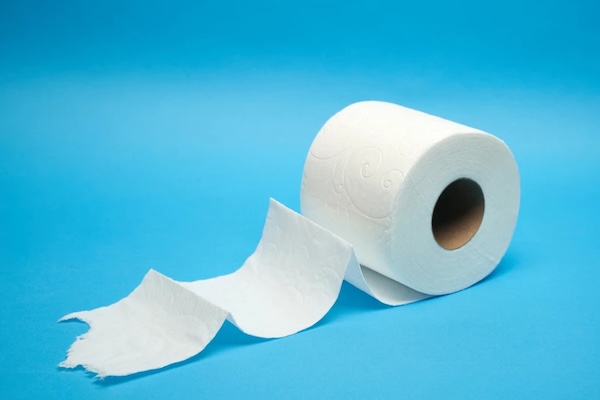
"You may be sitting on — so to speak — a very valuable asset that scientists would love to get their hands on: your poop. As well as blood, plasma, and organs, you can now donate fecal samples to stool banks for research and use in transplants. … 'The idea is to use it for "poo" transplants, otherwise known as fecal microbiota transplantation,' explained Nadeem O. Kaakoush, Associate Professor of the Host-Microbiome Interactions Group at UNSW Sydney. 'That's when poo products made from healthy donor poo are transplanted into another person to improve their health.'" |
|
|
Interested in having one of your social posts featured in The Futurist? |
|
|
Powered by StackCommerce
17383 Sunset Blvd. Suite A345
Pacific Palisades, CA 90272
Copyright © 2025 StackCommerce
All rights reserved | |
|
|





![WeVibe - Your holiday shopping just got a lot more... stimulating | [Partner]](https://d15k2d11r6t6rl.cloudfront.net/public/users/Integrators/669d5713-9b6a-46bb-bd7e-c542cff6dd6a/40bd9518025f4054bd691f353eefaddb/12_06_futurist_2_wevibe.jpeg "WeVibe - Your holiday shopping just got a lot more... stimulating | [Partner]")




![StackSocial - Science says your brain wants to flirt in French | [Partner]](https://d15k2d11r6t6rl.cloudfront.net/public/users/Integrators/669d5713-9b6a-46bb-bd7e-c542cff6dd6a/40bd9518025f4054bd691f353eefaddb/12_06_futurist_5_babbel.jpeg "StackSocial - Science says your brain wants to flirt in French | [Partner]")





No comments:
Post a Comment