 |
Shoelaces are older than most civilizations. |
World History |
 |
| |
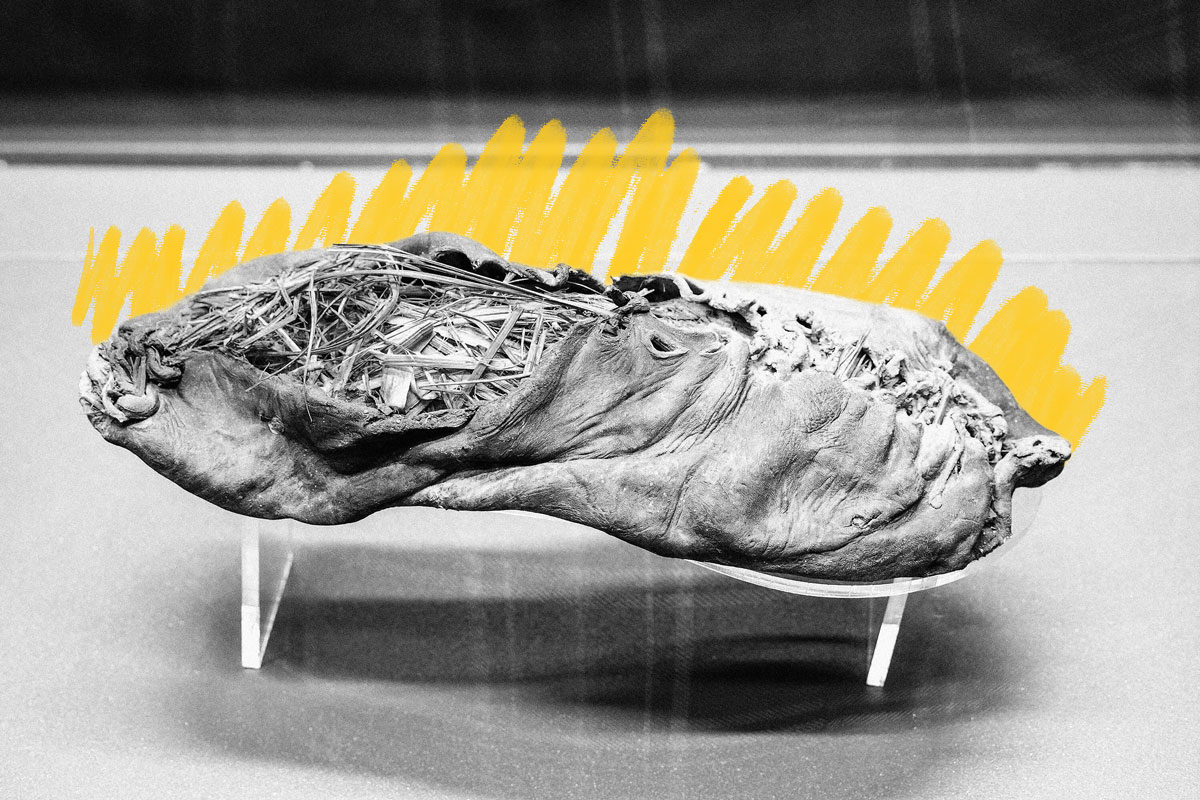
Archaeologists discovered the ancient shoe in 2008 inside Areni-1, a cave complex in Armenia. The remarkably stable, dry conditions there had preserved organic materials that would normally decay. (The thick layer of sheep dung atop the shoe likely also helped.) Fashioned from a single piece of cowhide and shaped specifically for the wearer's right foot, the shoe features leather laces threaded through eyelets — a design so practical that similar construction methods survived in Ireland until the 20th century. When the artifact was unearthed, parts of the laces were still visible, astonishing the research team. | |
That puts shoelaces only slightly younger than the earliest known human civilizations. Ancient Mesopotamia emerged around 4000 BCE, with the earliest Sumerian city-states taking shape in the fertile lands between the Tigris and Euphrates rivers. The beginning of the ancient Egyptian civilization appears to date to roughly the same period, although archaeological research in both regions is ongoing. Every other major civilization — from the Indus Valley to ancient China and the cultures of the Americas — arose centuries or millennia later. | |
That means humans were tying their shoes before they were building pyramids (starting around 2700 BCE) or inventing writing (around 3300 BCE). Modern civilization would take thousands more years to arrive, but the humble shoelace was already doing its job. You might say humanity started out on the right foot. |

 | |||||||||
By the Numbers | |||||||||
| |||||||||
| |||||||||
| |||||||||
| |||||||||
The Knights Templar banned shoelaces. | |||||||||
The Order of the Knights Templar may be famous today for crusades, treasure myths, and supposed secret rituals, but in real life, they were sticklers for rules. Lots of rules. Their governing document, known as the Rule of the Templars, was first written in 1129 and laid out 68 strict regulations covering nearly every detail of daily life. It reflected the order's vows of poverty, chastity, and — above all — obedience. Among its more surprising prohibitions: shoelaces. This particular rule explicitly banned pointed shoes and laces, declaring them "abominable things" associated with pagans. Templars were expected to wear plain, functional footwear, just as their habits were meant to be unadorned and free of vanity. Shoelaces weren't the only forbidden indulgence, though. The rules also outlawed board games such as chess and backgammon, sharply restricted contact with women (including mothers and aunts), limited clothing materials, and required mostly silent meals. For the Knights Templar, devotion meant discipline — and apparently, tying your shoes crossed the line. | |||||||||

| |||
Recommended Reading | |||
 | |||
Famous Figures | |||
| |||
 | |||
Arts & Culture | |||
| |||
| + Load more | |||
| |||||||||||||||||||||||||||||||||||||||||||||||||||||||











| |||||||||
| 325 North LaSalle Street, Suite 200, Chicago, IL 60654 | |||||||||
|


No comments:
Post a Comment