 |
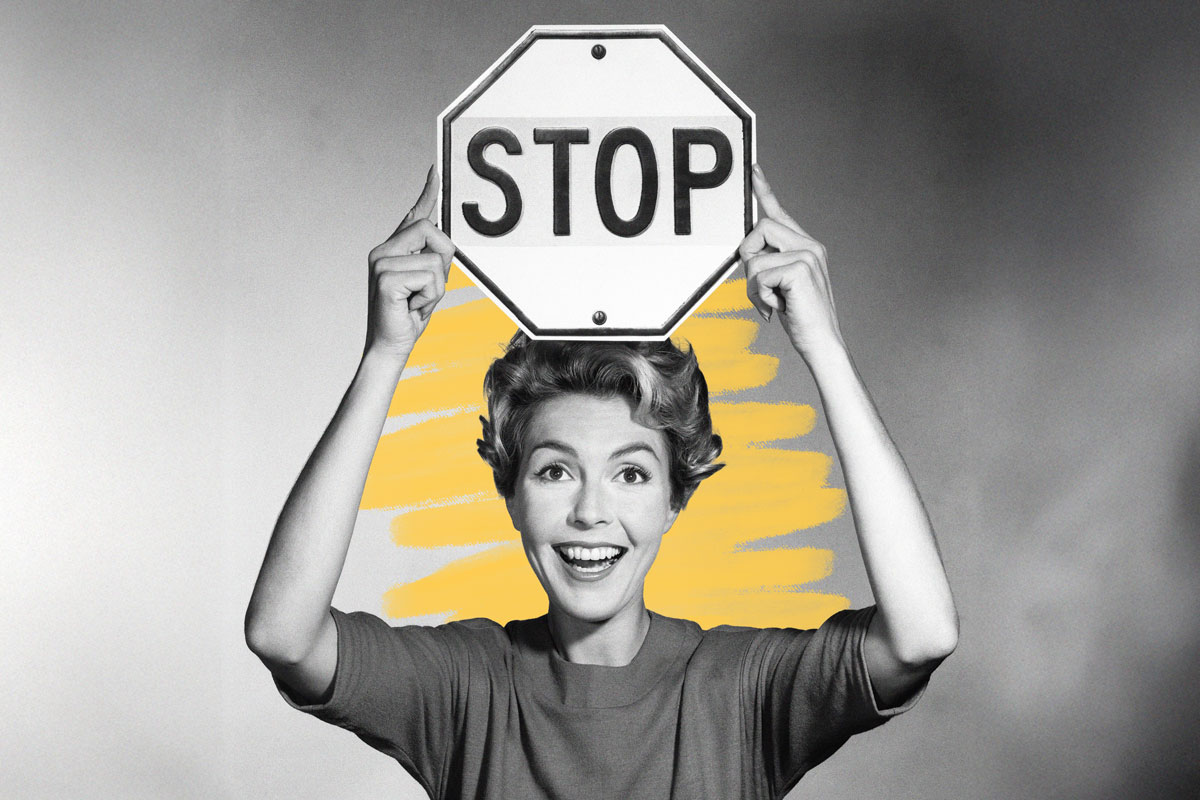
Stop signs used to be yellow, not red. |
U.S. History |
 |
| |
Mind you, these early signs, first installed in Detroit around 1915, looked nothing like the ones we're familiar with today. They were originally a simple square sheet of metal — white with black lettering — rather than the distinctive red octagon. The eight-sided shape emerged in 1922, when a regional highway association developed a system of sign shapes based on perceived danger levels. Circles were reserved for the highest-risk situations, such as railroad crossings; octagons signaled the next tier of seriousness, making them the choice for "STOP." The idea was that even drivers approaching the sign from behind could recognize it by silhouette alone. | |
Color took longer to standardize. Early traffic engineers wanted a red stop sign, since red already meant stop in the growing world of traffic lights. But durable red reflective materials didn't exist yet. As a result, the 1935 edition of the Department of Transportation's "Manual on Uniform Traffic Control Devices" (MUTCD) specified a yellow background with black letters. | |
By the early 1950s, advances in porcelain enamel coatings finally made long-lasting red signs practical. In 1954, the MUTCD officially adopted the now-familiar red octagon with white lettering — a design that soon became one of the most recognizable symbols in modern driving culture. |

 | |||||||||
By the Numbers | |||||||||
| |||||||||
| |||||||||
| |||||||||
| |||||||||
The inventor of the stop sign never learned how to drive. | |||||||||
William Phelps Eno is often called the "father of traffic safety" as his visionary ideas helped invent the rules that guide modern streets. Yet despite shaping how the world drives, he never actually learned to drive himself. His interest in traffic began after he witnessed a horse-drawn-carriage jam in 1867 in New York City, where a dozen vehicles became hopelessly tangled. The experience convinced him that clearer systems were urgently needed. After inheriting a large fortune in 1898, Eno devoted his life to creating what was then a new discipline: traffic management. After proposing the stop sign, he went on to develop early traffic plans for New York, Paris, and London. His work helped standardize practices that today seem indispensable — lane markings, one-way streets, traffic circles, and systematic signage. In 1921, he founded the Eno Center for Transportation, which continues to influence transportation planning. But he was a man who preferred horses to cars. When he died in Connecticut in 1945 at 87, he had never driven a car — although he did earn an honorary driver's license in France, in thanks for his work there. | |||||||||

| |||
Recommended Reading | |||
 | |||
World History | |||
| |||
 | |||
Famous Figures | |||
| |||
| + Load more | |||
| |||||||||||||||||||||||||||||||||||||||||||||||||||||||










| |||||||||
| 325 North LaSalle Street, Suite 200, Chicago, IL 60654 | |||||||||

No comments:
Post a Comment