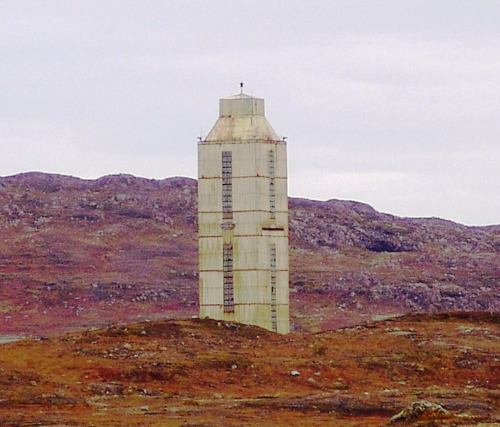
 Practical Investment Analysis for the New Energy EconomyWe're Now Drilling for Watts, NOT OilUp near the Arctic Circle, the Soviet Union once decided to pull off an extraordinary feat of drilling. Maybe they figured the Earth was just in their way… so they drilled. But the interesting part is that these Soviets weren't going after oil nor after water. In fact, not any metal was their ultimate target. Those Soviet scientists simply wanted to see how deep they could drill into the Earth's crust — and they treated it like a national priority. Drilling the Kola SG-3 started on May 24, 1970, and it took nine years for the Soviet team to break the world depth record after reaching 9,583 meters, or about 31,440 feet.
Then in true Soviet fashion, they decided it wasn't enough and went for more. Roughly a year later in 1983, a second hole branched out of the main central hole and broke past 12,000 meters, or 39,587 feet. Then this drilling team went for broke and branched off another hole in 1986 and hit a record 12,262 meters — approximately 40,230 feet — within three years. That's when the Soviets hit a huge problem. You see, temperatures ran far hotter than expected, and the rock didn't behave like brittle rock anymore. It began to deform, more like plastic under pressure, and the hole became harder to keep stable. Drilling ultimately stalled and the project wound down, with money and momentum drying up right on schedule. At first, the story of the Kola Superdeep Borehole is told like a warning: don't tempt the deep Earth. But it's also a reminder of something simpler. That is, deep drilling isn't a mystery, it's an engineering problem. Gold didn't spike — it settled. After a historic run, gold isn't crashing back, it's setting a new floor at that psychological benchmark of $5,000/oz. $5,000 gold is no longer a bet — it's a foundation. Central banks have spoken with their balance sheets: more gold, fewer Treasuries, and no interest in going back. NatGold gives you the same foundation — a blockchain-backed token secured by real, in-ground gold. Fully verified. No vaults. No smoke. Just weight. If $5,000 is the new floor, what's the ceiling? Click here to claim your NatGold — and step onto solid ground. Drilling for Watts, Not Just Oil For decades, the world's best drilling talent chased hydrocarbons, and for good reason, too, because the global thirst for more crude oil hasn't slowed — demand is expected to break over 105 million barrels per day this year. After nearly 20 years, horizontal drilling went from novelty to muscle memory. Throughout that shale boom, measurement tools improved, models became more accurate, and drilling efficiencies hit new heights. In other words, execution got faster. Now, they're target happens to be the exact problem that the Soviets ran into with the Kola Superdeep Borehole: Heat. Let's start with an uncomfortable truth about geothermal energy… In 2023, geothermal power only produced about 0.4% of total U.S. utility-scale electricity generation, concentrated in a handful of western states where the geology is generous and the heat is easy to reach. Traditional geothermal is more like mining a naturally occurring reservoir. You go where the hot water already wants to flow. However, enhanced geothermal systems (EGS) are flipping this model. Rather than waiting for the perfect geology, the plan here is to drill deep enough to reach the same high temperatures that the Soviets hit, then create or enhance permeability, circulate fluid through hot rock, and bring that heat back up in a controlled loop to generate electricity. Right now, EGS lives or dies on execution. We don't need a miracle, mind you, just repeatable wells, predictable costs, and performance that utilities can bank on. Still sounds like a fantasy? Well, perhaps it's time to meet reality… At its new Project Blanford site in Millard County, Utah, Fervo reported resource temperatures above 555°F at roughly 11,200 feet, drilled in under 11 days. In case you were wondering, that's the hottest well these guys have drilled to date. However, even more important than the headline temperature is what sits behind it: appraisal work that reduces the uncertainty of geothermal power. An independent assessment using appraisal data indicated a multi-gigawatt resource potential at Fervo's site, and a diagnostic fracture injection test was performed successfully to validate stimulation ability and gather reservoir data for development planning. We're still in the early innings of this game, too. You see, the Department of Energy's EGS demonstration portfolio includes the FORGE field site in Utah for testing and accelerating EGS techniques. Plus it has a history of funding demonstrations and data collection intended to drive cost and performance down. If this is going to be a meaningful slice of U.S. power, then we can see that the roadmap is already on the table. In fact, the DOE's GeoVision work has long framed a future where geothermal capacity could scale dramatically with technology improvement. We're talking about at least 90 GW of geothermal capacity by 2050. So what changes going forward? For starters, the grid is becoming less forgiving. Electricity demand is rising, and reliability has become a political and economic constraint again. In that world, EGS isn't trying to "win" the energy transition, just simply trying to make the whole thing work. AI Is STEALING From You It's time to delete ALL of your social media accounts. Why? Because AI firms are downloading every part of your digital identity to train AI models like ChatGPT WITHOUT your permission or any compensation. Luckily, I've found a government-backed income stream that could pay you up to $41,430 a year in "AI equity checks." Best of all, it takes only five minutes and as little as $10 to get started! Follow these three simple steps to receive your first check. Follow the Geothermal Profits Right now we're witnessing the geothermal story finally shifting from "interesting" to something more important — bankable! First the models start talking about reliability as a system cost. Then the drill bit starts hitting repeatable results. Before long, long-term buyers show up asking for a cleaner power source… one that doesn't care what the weather is like outside. And you can bet by the time the headlines declare geothermal "the next big thing," those early positions are already taken on Wall Street. By then, they'll be ahead of the herd (again). That's why it's crucial to find the geothermal players that can prove scalability with real data. We're not trying to find the moonshot geothermal projects stuck in theoretical stages that aren't stuck in theory. The winners won't necessarily be the ones holding acreage; they'll be the ones actually tapping into that deep heat — high-temperature drilling capability, completions expertise, subsurface modeling, fiber and sensing, and power conversion equipment designed to squeeze more electricity out of hotter brine. The Kola borehole proved the heat is real, and Fervo's newest Utah well is the kind of datapoint that makes boardrooms stop saying "someday." Take a moment and look at who already has drill-ready geothermal projects mapped in the U.S., who is actually improving drilling times and well performance, and who is building the partnerships that turn a hot hole into dependable megawatts. That's where the next baseload buildout can quietly begin. Until next time,
Keith Kohl A true insider in the technology and energy markets, Keith's research has helped everyday investors capitalize from the rapid adoption of new technology trends and energy transitions. Keith connects with hundreds of thousands of readers as the Managing Editor of Energy & Capital, as well as the investment director of Angel Publishing's Energy Investor and Technology and Opportunity. For nearly two decades, Keith has been providing in-depth coverage of the hottest investment trends before they go mainstream — from the shale oil and gas boom in the United States to the red-hot EV revolution currently underway. Keith and his readers have banked hundreds of winning trades on the 5G rollout and on key advancements in robotics and AI technology. Keith's keen trading acumen and investment research also extend all the way into the complex biotech sector, where he and his readers take advantage of the newest and most groundbreaking medical therapies being developed by nearly 1,000 biotech companies. His network includes hundreds of experts, from M.D.s and Ph.D.s to lab scientists grinding out the latest medical technology and treatments. You can join his vast investment community and target the most profitable biotech stocks in Keith's Topline Trader advisory newsletter.
|

 Check us out on YouTube!


No comments:
Post a Comment