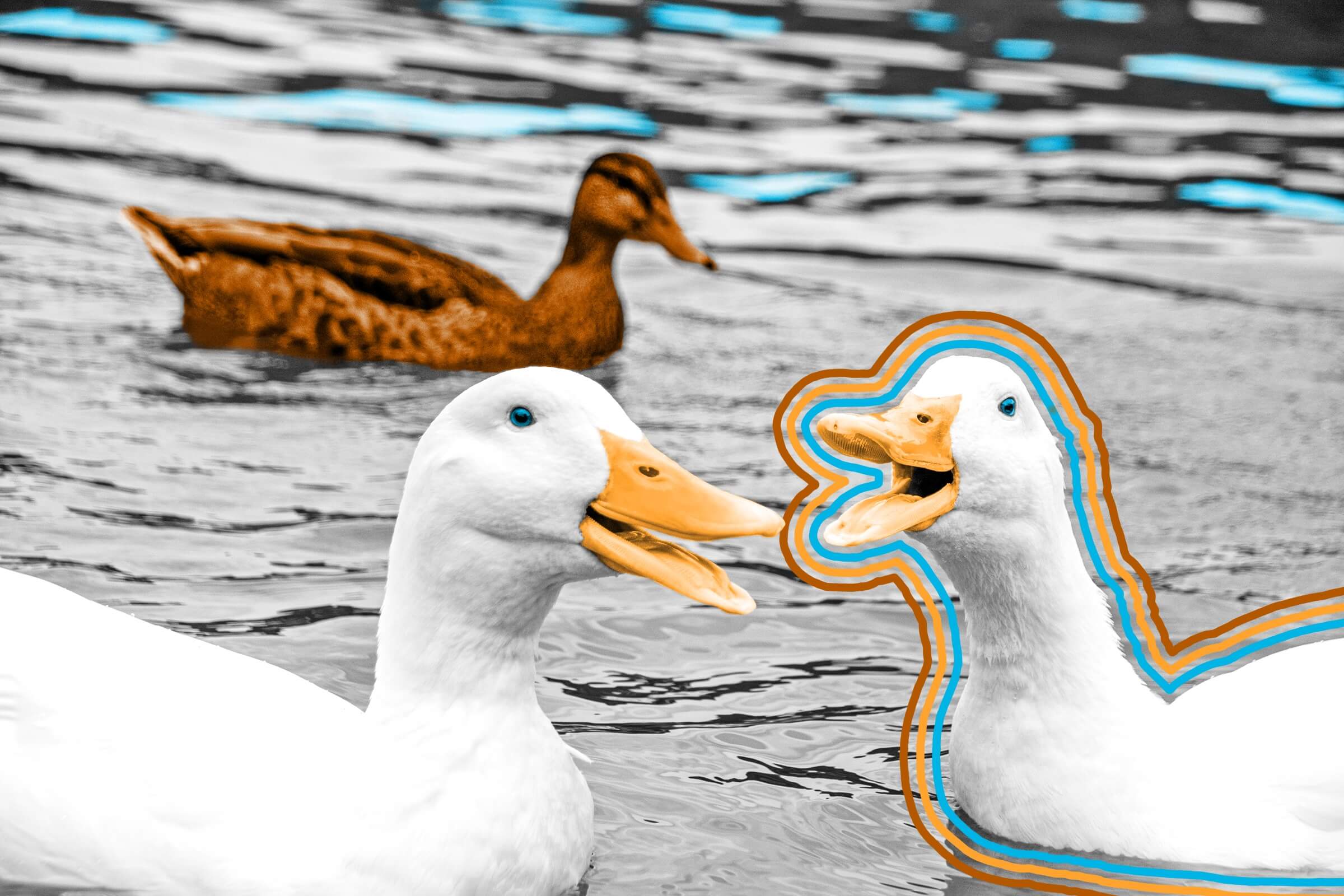
| You probably know the old saying, "If it looks like a duck, walks like a duck, and quacks like a duck, then it just may be a duck." But there's a slight wrinkle in that logic, because not all ducks quack the same. Research has shown that ducks from different areas can develop regional "accents," not unlike humans, that can be heard in their quacks. Professor Victoria de Rijke of London's Middlesex University found that London ducks have a louder and rougher quack, described as sounding like a shout or a laugh, compared to the softer, more relaxed sounds of countryside quackers in Cornwall, England. Ducks are extremely adaptable creatures, and it's believed the city ducks made adjustments to compete with urban noise. Hunters and call makers (people who craft animal calls for hunting) have also picked up on these regional differences, honing in on distinct styles to match local duck flocks. From the loud, high-pitched calls made by the ducks of Tennessee's beloved Reelfoot Lake to the subtle, more infrequent quacks of Louisiana waterfowl, each style reflects years of close listening to ducks whose sounds have been shaped by their habitats. | 






No comments:
Post a Comment