Who is the 'Jack' in 'jumping jacks'? | | Are jumping jacks named after a real person, or are they a gym teacher's invention? Here's a quick examination of the etymological history behind this common exercise. | |  | Bennett Kleinman |
|
| |  | | T here are far too many famous Jacks to count — including (but not limited to) Lemmon, Nicholson, Benny, and even the fictional Jack Bauer from TV's 24. But what about "jumping jack," as in the calisthenic exercise? Does this name refer to a real Jack, or does the credit lie elsewhere? Let's jump into figuring out the phrase's true etymological history.
According to Merriam-Webster, the earliest use of "jumping jack" dates back to 1883, long before the exercise was invented. At that time, it referred to "a toy figure of a man jointed and made to jump or dance by means of strings." These wooden toys were quite popular in parts of England, France (where they were known as pantins), and Germany (where they were called Hamplemann) in the 17th through 19th centuries. Similar puppets have been found in Brazil, North America (from the Hopi people), and in Africa (in the form of Yoruba carved masks). In England, the name "Jack" was likely given to this toy because it was a common way to refer to any male figurine at the time — similar to how we'd refer to any random man as an "average Joe" today. |
| | Continue reading | |  |
|
Emoji Decoded | |  | | Speaker | | | Meaning: Indicates a speaker at high volume, often used to represent sound, music, or audio notifications.
Evolution: As part of a set of speaker emojis (🔇🔈🔉🔊), this one includes sound waves to demonstrate the highest volume. It's frequently used on social media to indicate audio content or to suggest turning the sound on.
Usage: [Caption on a video post:] 🔊 Trust me, you'll want to hear this! |
|
| | Speaker | | | Meaning: Indicates a speaker at high volume, often used to represent sound, music, or audio notifications.
Evolution: As part of a set of speaker emojis (🔇🔈🔉🔊), this one includes sound waves to demonstrate the highest volume. It's frequently used on social media to indicate audio content or to suggest turning the sound on.
Usage: [Caption on a video post:] 🔊 Trust me, you'll want to hear this! |
|
| |
Have you read? | | 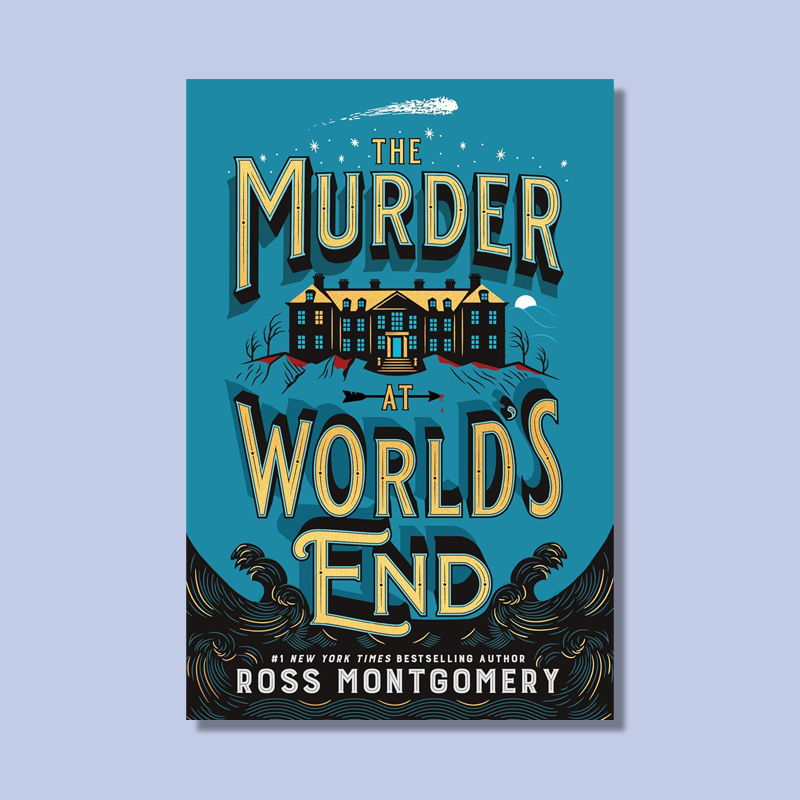 | | The Murder at World's End | | | | Set in 1910, this murder mystery novel unfolds on a remote island in the English Channel. The eccentric Viscount of Tithe Hall believed the passing of Halley's comet was a sign of an oncoming apocalypse, and he sealed up his sprawling mansion, trapping his guests inside. The next morning, he's found dead in his locked study, and every person in the house is a suspect. Recommended for those who like cozy mysteries and mansions with secret passageways. | | | | Samantha Abernethy, Word Smarts Writer | | | | We independently evaluate all recommended products and services. If you click on links we provide, we may receive compensation. |
|
| | The Murder at World's End | | | | Set in 1910, this murder mystery novel unfolds on a remote island in the English Channel. The eccentric Viscount of Tithe Hall believed the passing of Halley's comet was a sign of an oncoming apocalypse, and he sealed up his sprawling mansion, trapping his guests inside. The next morning, he's found dead in his locked study, and every person in the house is a suspect. Recommended for those who like cozy mysteries and mansions with secret passageways. | | | | Samantha Abernethy, Word Smarts Writer | | | | We independently evaluate all recommended products and services. If you click on links we provide, we may receive compensation. |
|
| |
|





No comments:
Post a Comment